

Photo credit: jb
I’ve made the observation before – IRAs are like belly-buttons: just about everyone has one these days, and quite often they have more than one.
Wait a second, maybe they’re not quite like belly-buttons after all.
Oh well, you get the point – just about everyone has at least one IRA in their various retirement savings plans, and these accounts will eventually be subjected to Required Minimum Distributions (RMDs) when the owner of the account reaches age 72. (This just changed with the passage of the SECURE Act in 2019 – it used to be 70½.)
So what are RMDs from IRAs, you might ask? When the IRA was first developed, it was determined that there must be a requirement for the account owner to withdraw the funds that have been hidden from taxes over the lifetime of the account. Otherwise the IRS would never benefit without the taxes that are levied against the account withdrawals. To facilitate the forced withdrawals, a schedule was prepared approximating the life span of the account owner year after year. This schedule prescribes a minimum amount to be withdrawn each year that the account owner is alive, until the account is exhausted.
A participant in a traditional IRA (Roth IRAs are not subject to RMD rules by the original owner) must begin receiving distributions from the IRA by April 1 of the year following the year that the participant reaches age 72. In other words, assuming that the participant reaches age 72 during the 2021 calendar year, 2021 is the first RMD year. Therefore, the first RMD must be withdrawn before April 1, 2022.
If you were born before July 1, 1949, you are subject to the old rule, which indicates that your first RMD year is the year that you reach age 70½.
After that first year’s RMD is withdrawn, the second year’s RMD must be taken by December 31 of the same year. For all subsequent years, the RMD must simply be withdrawn by December 31 in order to be credited for that year.
If you don’t want to double up the distributions for your first and second RMDs, you can take the first RMD by December 31 of the year you reach age 72. By taking your first and second RMDs as originally described (first one by April 1 and then another by December 31), you will be taxed on both distributions in a single year. This might result in adverse taxes to you.
Calculation of RMDs from IRAs
Calculation of the RMDs from IRAs is fairly straightforward, although there is some math involved. For the first year of RMD, the participant is age 72. IRS determines your applicable age based on your age at the end of the year. According to the Uniform Lifetime Table (See IRS Publication 590 for more detail on other tables), the distribution period for a 72-year-old is 25.6.
Jerry has IRAs worth $100,000 at the end of the previous year and will be 72 at the end of the current year. Jerry will divide the balance of $100,000 by 25.6 to produce the result of $3,906.25 – the RMD for his first year.
Each subsequent year, Jerry reviews the balance of his accounts on December 31 of the previous year. Jerry looks up the distribution period from the Uniform Lifetime Table for his attained age for the current year. He then takes the balance and divides by the factor for his current year, producing the RMD amount. Then Jerry just has to take a distribution of at least that amount (the RMD) during the calendar year.
Note, I made a point of indicating that you calculate your RMD based on the balance of all of your IRAs. This is because the IRS considers all of your traditional IRAs as one single account for the purpose of RMDs. You are required to take RMD withdrawals based on the overall total of all IRA accounts (only traditional IRAs, not Roth IRAs). This withdrawal can be from one IRA account, evenly from all IRA accounts, or in whatever combination you wish as long as you meet the minimum distribution for all IRA accounts that you own.
It’s different for RMDs from non-IRA retirement accounts. With the exception of 403(b) plans, employer plans cannot be aggregated to determine RMDs. But that’s a subject for another time.
Another point that is extremely important to note: taking these distributions is a requirement. Failing to take the appropriate distribution will result in a penalty of 50% (yes, half!) of the RMD that was not taken. As you can see, it really pays to know how to take the proper RMDs from IRAs.
Understand that the examples I’ve given are for simple situations, involving the original owner of the account and no other complications. In the case of an inherited IRA or other complicating factors, or if the account is an employer’s qualified plan rather than an IRA, many other factors come into play that will change the circumstances considerably. If you need help on one of these more complicated situations, it probably would pay off in the long run to have a professional help you with the calculations.



 Sterling Raskie, MSFS, CFP®, ChFC®
 The latest in our Owner’s Manual series, A 401(k) Owner’s Manual, was published in January 2020 and is available on
  A Medicare Owner’s Manual, is updated with 2020 facts and figures. This manual is available on
  Social Security for the Suddenly Single can be found on Amazon at
  Sterling’s first book, Lose Weight Save Money, can be
  An IRA Owner’s Manual, 2nd Edition is available for purchase on Amazon. Click the link to choose the
 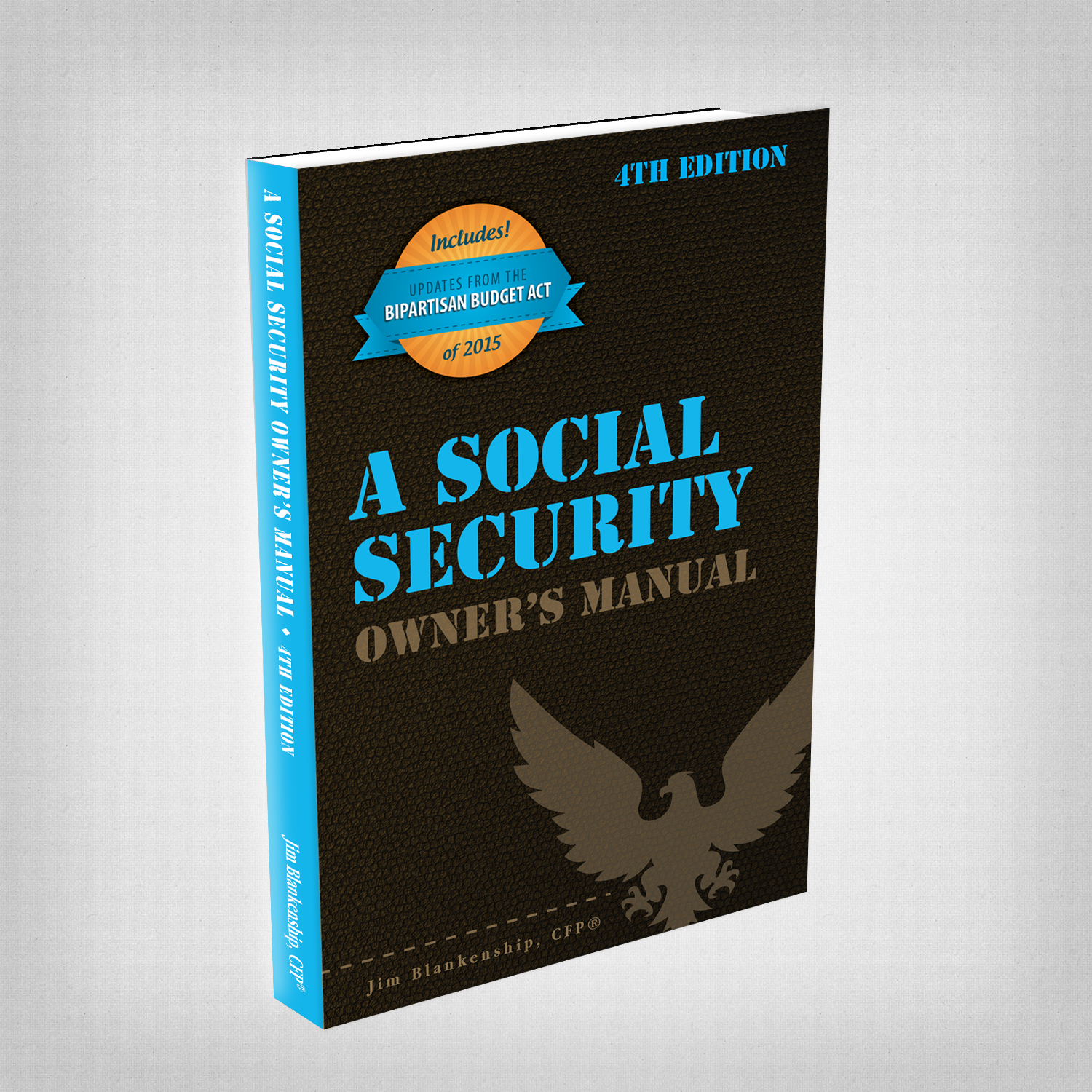 Jim’s book – A Social Security Owner’s Manual, is now available on Amazon. Click this link for the
  And if you’ve come here to learn about queuing waterfowl, I apologize for the confusion. You may want to discuss your question with Lester, my loyal watchduck and self-proclaimed “advisor’s advisor”.
Somewhat off topic….am I allowed to deposit $7,000 of my RMD withdrawal next year into my Roth IRA if i have NO earned income? I”m 71 years old this year and have been retired since 2017. Or am I required to have a minimum of $7000 in earned income to do that?
Unfortunately you need to have earned income, either from a W2 job, a 1099-NEC (contractor) job, or net self employment income in order to make IRA contributions, either in a Roth or a traditional IRA. RMD is not earned income, so you must have other income (as outlined) in order to do this.
Now, on the other hand, you could convert money from your traditional IRA (or other deferred plan) to a Roth IRA – but the amount that you convert has to be after you’ve taken your RMD for the year, once you’re subject to RMDs. For this year, since you’re under age 72 you could convert funds over to Roth without any restrictions, you just pay tax on the amount converted.
Question:
My goal is to minimize the taxes paid. I will turn 70.5 in December 2019 and have a small 403 (b)(9) plan (balance: $100,000 in Dec. 2018). I understand that I must begin taking RMD from it this year.
Another advisor suggests that as long as I don’t take any money out (an optional feature) AND as long as I annuitize the amount over the period of my spouse’s and my joint lifetime, I will NOT be subject to a lump-sum RMD payment.
Most of the “series of payments of equal period payments” material that I’ve read (including one of your previous articles) seems to refer primarily to early distributions . I’m not sure the SOSEPP is the basis for the other person’s advice, but, I **WOULD** like to know if you agree with their advice.
Thanks in advance!!
To the best of my knowledge, there is no exception to the RMD rules for a 403(b) plan. You are required to take your first distribution by April 1 of the year following your reaching age 70 1/2, as with all other plans. Delaying to some time after the end of the year that you’ve reached 70 1/2 will result in two RMDs for that year, however.
For most folks, it works best to take the first RMD in the year you reach 70 1/2, and then continue the process for each following year. In some cases it might be advantageous to delay the first RMD until after the end of the calendar year – such as if you worked full time prior to reaching age 70 1/2 and will not be working (thus lower overall income) in the following year.
The one exception for RMDs of 403(b) plans and 401(k) plans is that if you’re still employed by that employer and are not a 5% or greater owner of the business, you can delay your RMD until you stop working for that employer. IRAs do not qualify for this exception.