
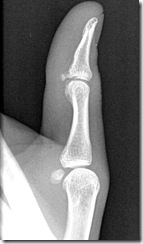
 (In case you are confused by the headline: a principle is a rule, and pollex is an obscure term for thumb. Therefore, we’re talking about Rules of Thumb.)
I like rules of thumb, as a rule of thumb… I think we all generally want difficult issues in our lives to be boiled down to a simple, easy-to-understand statement. These rules of thumb are everywhere, all around us. Heck, there’s even a whole website dedicated to rules of thumb, where you can find rules on all kinds of subjects, as diverse as how to outrun a crocodile to changing your answers on a test.
Save 10% of Your Income
Let’s start with one of the basics you might hear regularly: Save 10% of your income. Like most all rules of thumb, this one is very general in nature, but it provides a good starting point.
This starting point is best for someone starting the savings process at an early age – perhaps in your twenties or thirties. If you started to save 10% of your income at an early age and kept up the habit over your lifetime, you’d be bound to have a significant sum of money put aside when retirement comes. (You might be interested to note that this particular rule of thumb is one of the base recommendations in the book “The Richest Man in Babylon” which I wrote a summary of some time ago.)
The problem is that many folks don’t start early in life, and by the time they get around to saving in earnest (maybe in their forties), 10% savings will likely be woefully inadequate – 25% to 30% may be more appropriate.
The other, likely bigger problem with the 10% rule is that it doesn’t account for your timeline or the purpose or goal for the savings. The assumption of the rule of thumb is that you have a long timeline, meaning 30 or more years, and that your goal is retirement at some poorly-defined rate of income, such as 80% of pre-retirement income (see below). These two assumptions don’t fit everyone – although they could fit some people in general, your mileage may vary, quite a bit. If your timeline is shorter (say 10 to 15 years or less) or your goal is for a higher retirement income your percentage of savings should be higher, possibly much higher. If your goal is something altogether different, like a downpayment on a home (in a short timeline but of a specific, small-ish amount), 10% would be too much – although you will likely benefit on other goals by saving at least 10% starting at any time.
So, for a starting point, for someone with a relatively long timeline and a vague goal to aim for, 10% isn’t a bad place to start. Start with 10% (or however much you can afford) and adjust upward over time. It’s better than no rule at all, in my opinion.



 Sterling Raskie, MSFS, CFP®, ChFC®
 The latest in our Owner’s Manual series, A 401(k) Owner’s Manual, was published in January 2020 and is available on
  A Medicare Owner’s Manual, is updated with 2020 facts and figures. This manual is available on
  Social Security for the Suddenly Single can be found on Amazon at
  Sterling’s first book, Lose Weight Save Money, can be
  An IRA Owner’s Manual, 2nd Edition is available for purchase on Amazon. Click the link to choose the
  Jim’s book – A Social Security Owner’s Manual, is now available on Amazon. Click this link for the
  And if you’ve come here to learn about queuing waterfowl, I apologize for the confusion. You may want to discuss your question with Lester, my loyal watchduck and self-proclaimed “advisor’s advisor”.
I agree that 10% is a good place to start, but probably not where you want to end up if you want a decent retirement. My rule was to start at 10%. Each time you get a pay increase, or if you get an annual bonus, commit half to your spending budget (so you can enjoy the benefits of your good work) and half to your savings rate – preferably via payroll deduction so it’s automatic. So if a new job nets you, say, a 6% pay increase, the 3% that goes to your savings represents a 30% increase in your original savings rate. Do this over a lifetime and your standard of living will increase, but your savings will accelerate. I ended my career saving 35% of my income while building a reasonable nest egg with this simple strategy.
That’s a great strategy, Pete – similar to how I’ve counseled people over the years, and did so myself.