
There are several ways you can withdraw money from your 401k without penalty.
Independent financial advice: IRA, Social Security, income tax, and all things financial

There are several ways you can withdraw money from your 401k without penalty.

Recently, the IRS just announced the contribution limits for 401k plans (including 403b and 457 plans) as well as IRAs. Additionally, the IRS also announced changes to the income phase-outs for traditional IRA deductibility and Roth IRA eligibility. Let’s start with the 401k plans. For 2018, the IRS increased the contribution limits to $18,500, up $500 from $18,000 last year. The catch-up contribution for those age 50 or over remains unchanged at $6,000. $500 may not seem like much, but think of it this way – you get to give yourself a $500 raise! For those interested in maxing out their 401k plans in 2018, here’s the breakdown depending on whether you’re paid monthly, 24 weeks per year or 26 weeks per year. If you’re paid monthly, the contribution is $1,541.66. This brings you just eight cents under the $18,500 max annually. If you’re paid 24 weeks per year, then […]

If you’re like most folks, when you look at a 401k plan’s options you’re completely overwhelmed. Where to start? Of course, the starting point is to sign up to participate – begin sending a bit of your paycheck over to the 401k plan. A good place to start on that is at least enough to get your employer’s matching funds, however much that might be. In this article though, we’re looking at investing your 401k money. It’s not as tough as you think. In fact, it can be done in just two steps – taking no more than 30-45 minutes of your time. Step 1 – Look at your options When you’ve signed up for the 401k plan, review your options for investing your 401k. Look at the list of investments available – and from here you can take a shortcut if you like. If your plan has a “target […]

Combining and rolling over various retirement accounts is a decision that many individuals will face during their working career and in retirement. For individuals that are already retired, they may consider combining accounts to make required minimum distributions a bit easier (less paperwork, companies to deal with, etc.). Individuals that are still working may consider combining accounts as they switch jobs in an effort to consolidate plans from various employers to their IRA, Roth IRA or current employer plan. What follows are some considerations as well as a handy guide form the IRS regarding what rollovers and consolidations are allowed and specifics for each plan type. Be sure to check the fees of the plan you’re coming from to the plan you’re considering moving to. While consolidation may make sense, it may be a bad idea if the expenses of the plan and funds are higher in the plan you’re […]

There are several ways to get at your IRA funds before age 59½ without having to pay the 10% penalty. In this post we’ll cover the Medical Expenses which allow for a penalty-free distribution. There are three different Medical reasons that can be used to qualify for an early withdrawal: high unreimbursed medical expenses, paying the cost of medical insurance, and disability. Disability and high unreimbursed medical expenses are also applicable reasons allowing for early withdrawal of 401k funds without penalty. We’ll cover each of these topics separately below. High Unreimbursed Medical Expenses If you are faced with high medical expenses for yourself, your spouse, or a qualified dependent, you may be eligible to withdraw some funds from your IRA or 401k penalty-free to pay for those expenses. The amount that you can withdraw is limited to the actual amount of the medical expenses you paid during the calendar year, minus 10% […]

Many folks have a 401k plan – it’s the most common sort of retirement savings vehicle that employers offer these days. But there are things about your 401k plan that you probably don’t know – and these secrets can be important to know! The 401k plan is, for many, the only retirement savings you’ll have when you reach your golden years. Used properly, with steady contributions over time, a 401k plan can generate a much-needed addition to your Social Security benefits. But you have to make contributions to the 401k plan for it to work, and invest those contributions wisely. So how much do you know about your 401k plan? Below are 5 secrets that you probably don’t know about your 401k plan. Check with your 401k plan administrator to see if these provisions are available – some plans are more restrictive than others. Secrets You Don’t Know About Your […]

The 457(b) plan, sometimes known as a deferred compensation plan is a retirement plan that is generally set up by states, municipalities, colleges and universities for their employees. These plans have some similarities to their 401(k) and 403(b) counterparts, but they also have some differences that individuals with access to these plans may find advantageous. First, let’s look at the similarities. The 457(b) allows the same deferral limits as a 401(k) or 403(b). These limits for 2016 are $18,000 annually for those under age 50. For those age 50 and over, the deferral limit is $18,000 plus an additional $6,000 catch-up for a total of $24,000 annually. 457(b) plans may allow for pre-tax or Roth contributions. Individuals can choose among a variety of funds that the plan offers. At age 70 ½ the plans will require RMDs (unless still employed). At retirement or separation from service, individuals are generally allowed […]

As many of our readers know, employees that work for a school district, hospital, university or other non-profit organization may have access to a retirement plan called the 403(b). Similar to its cousin the 401(k), the 403(b) works very similar in that it allows employee contributions, and the employer may or may not match a percentage of those contributions. The 403(b) is also subject to the maximum contribution rules. In other words, an employee is allowed to contribute up to $18,000 annually if they’re under age 50 and those aged 50 and older are allowed an additional $6,000 catch-up contribution. Many of these plans also allow Roth contributions for their employees. A unique aspect of the 403(b) that readers may not be aware of is the 15-year rule for contributions. Generally, the 15-year rule allows an employee with at least 15 years of service (and their plan allows it) to […]

As 2015 comes to a close here are a few things to consider so you can make the most of your money for 2015. Take full advantage of your IRA contributions. For those age 50 and over, you’re allowed $6,500 and if you’re under age 50, $5,500. It may also be of benefit to see if you qualify for a deductible IRA contribution or if contributing to a Roth IRA makes sense. Make the maximum contribution to your employer sponsored retirement plan. Granted, there may not be much time left in the year to do this, but there is plenty of time to do so for 2016. Many companies have access to their plans online and employees can change contribution amounts when necessary. If you’re not already doing so, consider saving at least 10 percent of your gross income. Aim for 15 to 20 percent if you can. Pay yourself […]

You have this 401k account that you’ve been contributing to over the years, and now you’ve found yourself in need of a bit of extra cash. Maybe you need to cover the cost of a new furnace, or possibly you have some extra medical bills that need attention, and you don’t have the extra cash to cover. Whatever the reason, a loan from your 401k might be just the ticket. A 401k (or other employer-based plan like a 403b, 457, etc.) is unique from an IRA in that you are allowed to borrow against the account. An IRA can never be borrowed against, any withdrawals are immediately taxable. Before we go into the specifics of taking a loan from your 401k, since I’m a financial planner I have to put a word of warning out: Borrowing from your 401k should be considered a “last resort” option, when you’ve exhausted all […]

As a follow up to my post last week Beyond 401k and IRA, I discovered this week that I had neglected to point out a relatively new option that is very well worth considering. This option was brought to my attention by my friend and colleague (and fellow GPN member) Lisa Weil of Clarity Northwest Wealth Management in Seattle, WA: as of late last year with the issuance of IRS Notice 2014-54, there is the option of over-funding your 401k with after-tax dollars, and then rolling over those monies to a Roth IRA when you leave employment. The way it works is that after you max out your regular deducted 401k contributions, plus your company provided the matching funds, there is usually quite a bit of headroom available within the annual funding limits. You can (if your 401k administrator allows) make after-tax contributions to your 401k up to the limit […]

Conventional wisdom says that when you leave a job, whether you’ve been “downsized” or you’ve just decided to take the leap, you should always move your retirement plan to a self-directed IRA. (Note: when referring to retirement plans in this article, this could be a 401(k) plan, a 403(b), a 457, or any other qualified savings deferral-type plan). But there are a few instances when it makes sense to leave the money in the former employer’s plan. You have several options of what to do with the money in your former employer’s plan, such as leaving it, rolling it over into a new employer’s plan, rolling it over to an IRA, or just taking the cash. The last option is usually the worst. If you’re under age 55 you’ll automatically lose 10% via penalty from the IRS (unless you meet one of the exceptions, including first home purchase, healthcare costs, […]

In many employer sponsored plans such as a 401k, 403b, 457, or SIMPLE employees are generally given the option of deferring a fixed dollar amount or fixed percentage of their income. The question becomes which category to choose when initially enrolling in the plan and whether or not to change the original decision. Generally, the wiser decision is to choose (or switch to) the fixed percentage. The reason is that by choosing a percentage, you really never have to worry about increasing your contributions. For example, an individual starts a job earning $50,000 annually and decides to contribute 10% annually to his retirement plan which is $5,000 per year.

Today, we have so many choices for our retirement savings that it can be difficult to choose which sort of account to contribute to. If you are fortunate enough (as many are) to have more than one type of retirement plan available to you, in what order should you contribute to the accounts? Right now, at the beginning of a new year, is an excellent time to start with retirement savings. Qualified Retirement Plans First of all, many folks who are employed by a company have some sort of tax-deferred, qualified, retirement savings account available. These accounts go by many names – 401(k), 403(b), 457, and deferred compensation. These accounts are collectively referred to as qualified retirement plans, or QRPs. QRPs do not include IRAs – this is another type if retirement savings account with some different rules. A QRP account is a good place to start when contributing to […]

In this article in our series on the mechanics of 401(k) plans, we’ll be covering the concept of vesting. As with the other articles in the series, we’ll refer specifically to 401(k) plans throughout, but most of the provisions apply to all types of Qualified Retirement Plans (QRPs), which go by many names: 401(k), 403(b), 457, etc.. Vesting refers to the process by which the employer-contributed amounts in the 401(k) plan become the unencumbered property of the employee-participant in the plan. Vesting is based upon the tenure of the participant as an employee of the employer-sponsor of the plan. Generally, when an employee first begins employment there is a period of time when the employer wishes to protect itself from the circumstance of the new employee’s leaving employment within a relatively short period of time. Vesting is one way that the employer can protect itself from handing over employer-matching funds […]

Earlier in 2013, with the passage of ATRA (American Taxpayer Relief Act) there was a provision to loosen the rules for 401(k) plan participants to convert monies in those “regular” 401(k) accounts to the Roth 401(k) component of the account. Prior to this, there were restrictions on the source of the funds that could be converted, among other restrictions. These looser restrictions apply to 401(k), 403(b) and 457 plans, as well as the federal government Thrift Savings Plan (TSP). Recently, the IRS announced that guidance was available to utilize the new conversion options. As long as the 401(k) plan is amended to allow the conversions, all vested sources of funds can be converted, even if the participant is not otherwise eligible to make a distribution from the account. This means that employee salary deferrals, employer matching funds, and non-elective payins to the 401(k) account can be converted to a Roth […]

There’s been quite a bit of press lately about the recent Economic Policy Institute study (see this article “Rise of 401(k)s Hurt More Americans Than It Helped” for more), which indicates that the 401(k) plan itself is the cause of American’s lack of retirement resources. I think it has more to do with the fact that the 401(k) plan (and other defined contribution plans) were expected to be a replacement for the old-style defined benefit pension plans, and the fact that those administering the retirement plans did little to ensure success for the employees. Traditional defined benefit pension plans didn’t ask the employee to make a decision about how much to set aside – this was determined by actuaries. Then the company made sure that the money was set aside (in most cases) so that the promised benefit would be there when the employee retires. In the world of 401(k) […]

When you change jobs you have a choice to make regarding your retirement plan at former employer. If the plan is a 401(k), 403(b), or other qualified plan of that nature, you may have the option to roll the old plan into a plan at your new employer. The new employer’s plan must allow rollovers into the plan – this isn’t always automatic. Most plans will allow rollover of former employer’s plans, but not all. Once you’ve determined that the plan will accept a rollover, you should review the new plan to understand whether or not it makes sense to roll your old plan into it, or choose another option. Other options may be: rollover the old plan into an IRA, convert the old plan to a Roth IRA, leave the old plan where it is, or take a distribution from the old plan in cash. In this article we’ll […]

Over the past several weeks we’ve been writing articles to encourage all Americans to add at least 1% more to savings in the coming year. More than 20 of my fellow bloggers have submitted articles, and these articles include many great ideas that you can apply in order to increase your savings rate in the coming year. Since many employees are going through annual benefit elections right about now, it’s a very good time to increase your annual contributions to your retirement savings plans. Big changes are easiest to undertake with incremental steps – starting with adding 1% can have a great impact and get the momentum going! Listed below are all of the articles that I’ve been notified about so far – 22 23 in all! These folks are very smart, and have shared some great ideas. You owe it to yourself to check it out, and then take […]



Jim Blankenship, CFP®, EA
Phone 630-40-DUCKS (630-403-8257)
jim@blankenshipfinancial.com
Twitter: BlankenshipFP / Financialducks
Facebook: Jim Blankenship
LinkedIn: BlankenshipFP
Amazon: Author Page
Jim provides expert guidance for
your Retirement, Education Funding,
and Income Tax issues and concerns.
In addition to this blog, you’ll find Jim’s writings all around the internet, as he is a regular contributor to Forbes.com, TheStreet.com, and FiGuide. Several other sites also republish his work.
He has also written five books on Social Security, IRAs, 401(k) plans, and Medicare. See below for more on the books.
 Sterling Raskie, MSFS, CFP®, ChFC®
Phone 630-40-DUCKS (630-403-8257)
sterling@blankenshipfinancial.com
Twitter: SterlingRaskie
LinkedIn: SterlingRaskie
Sterling provides expert guidance for your Retirement, Insurance, Education Funding, Investments and Income Tax issues and concerns.
In addition to this blog, you’ll find Sterling’s writings all around the internet. Sterling is also an adjunct professor teaching courses in math, finance, investments and insurance.
 The latest in our Owner’s Manual series, A 401(k) Owner’s Manual, was published in January 2020 and is available on Amazon at this link. This book includes all of the updates to retirement plans with passage of the SECURE Act.
 A Medicare Owner’s Manual, is updated with 2020 facts and figures. This manual is available on Amazon at this link.
 Social Security for the Suddenly Single can be found on Amazon at this link. This book is narrowly-focused on divorcee Social Security strategies and rules. It is also available in a Kindle version.
 Sterling’s first book, Lose Weight Save Money, can be purchased by clicking this link. The book is also available on Kindle, which you can find at this Kindle version link.
 An IRA Owner’s Manual, 2nd Edition is available for purchase on Amazon. Click the link to choose the paperback version, or the Kindle version.
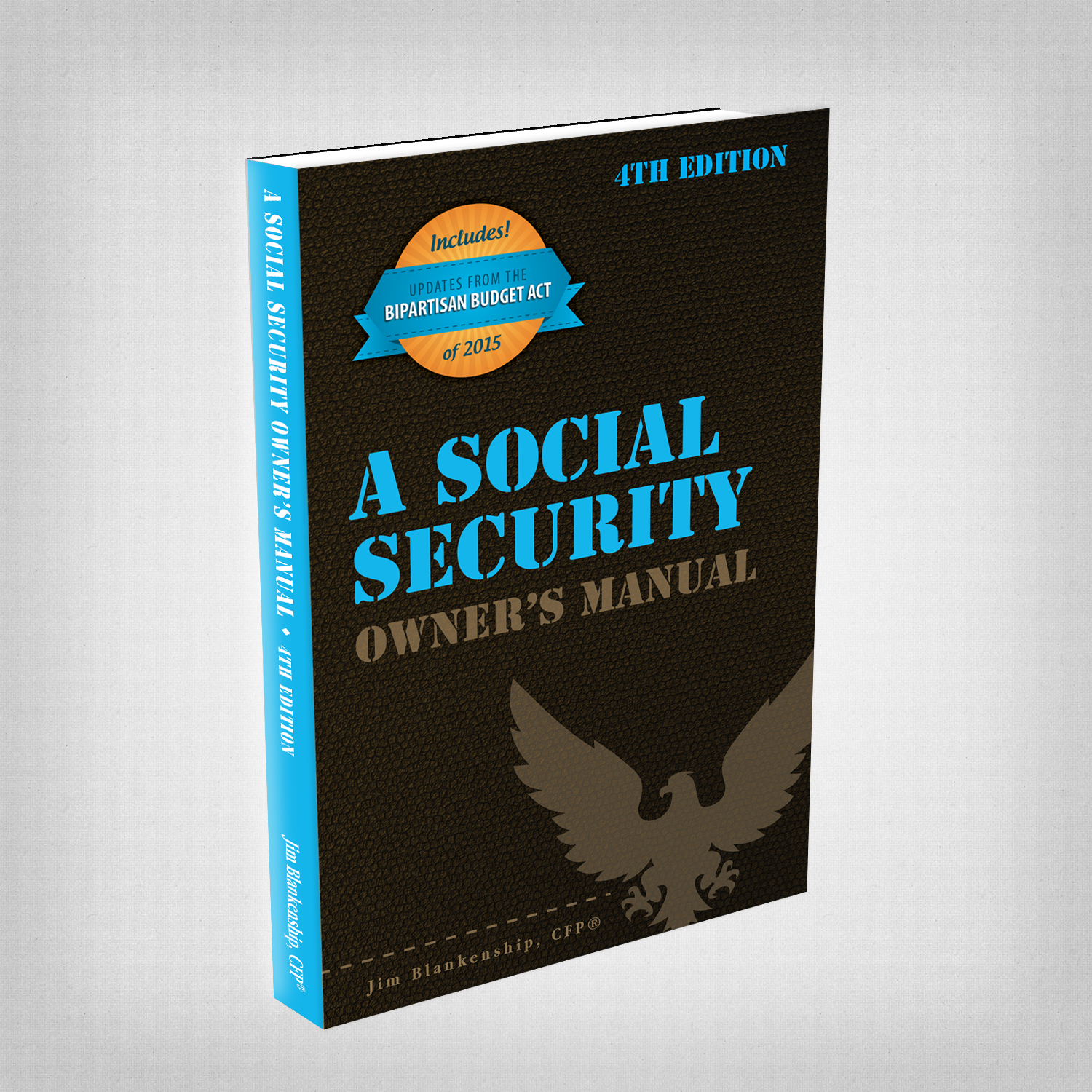 Jim’s book – A Social Security Owner’s Manual, is now available on Amazon. Click this link for the Amazon ordering page.
In case you hadn’t already noticed, this blog doesn’t have much to do with ducks – or any waterfowl for that matter.
No, what we’re doing here is talking about all things financial; getting your financial house in order. Here in the Midwest, “getting your ducks in a row” implies organization, which is one of the outcomes of having a better understanding of your financial life.
I hope you find the answers you’re looking for among the articles here, and perhaps a smile. If you can’t locate your answer, drop me an email or give me a call – we’ll see what we can find for you.
 And if you’ve come here to learn about queuing waterfowl, I apologize for the confusion. You may want to discuss your question with Lester, my loyal watchduck and self-proclaimed “advisor’s advisor”.
