
I received the following question from a reader. It’s a unique situation that you may find interesting, so I thought I’d share the interaction with you: Here’s my situation, this year I started with the following: (A) Rollover IRA (from rollover funds several years ago with no new funds added since. $157K was rolled over in 2020, but account is now valued at ~$146K). (B) Roth IRA (that was opened years ago with minimal amount, but no new funds added in the past decade due to income limitation). (C) Non-deductible (separate) traditional IRA account opened in 2016 with contributions deposited in each year, but have only been depositing NON-DEDUCTIBLE dollars (a total of $23K invested). However, the account was only worth ~$17K/$18K at the time I went to convert). In early 2022, after making the 2022 contributions, I converted the entire value of the non-deductible traditional IRA account to a […]
roth ira


Comparing a Roth IRA and Roth 401(k)
There can be confusion when it comes to the Roth name before retirement planning vehicles. This is an attempt to explain the difference between two very common retirement plans with Roth options – the Roth IRA and the Roth 401(k). Let’s start with the “Roth” part. Named after the senator that first introduced the legislation, having Roth in front of IRA or 401(k) means that contributions into the plan are made with after-tax dollars (money that’s already be subject to income taxation). When the account owner reaches a specific age (typically age 59.5) any distributions, including earnings (growth) are tax free. Roth IRAs allow annual contributions based on earned income (W2 or self-employed income) up to $6,000 or $7,000 annually (if over age 50). Roth IRAs also allow access to your contributions at any time without penalty, and do not have required minimum distributions at age 72. Finally, you can […]
Share, tweet, print, email, like or pin this post:


Your 401k and IRA in 2018
Recently, the IRS just announced the contribution limits for 401k plans (including 403b and 457 plans) as well as IRAs. Additionally, the IRS also announced changes to the income phase-outs for traditional IRA deductibility and Roth IRA eligibility. Let’s start with the 401k plans. For 2018, the IRS increased the contribution limits to $18,500, up $500 from $18,000 last year. The catch-up contribution for those age 50 or over remains unchanged at $6,000. $500 may not seem like much, but think of it this way – you get to give yourself a $500 raise! For those interested in maxing out their 401k plans in 2018, here’s the breakdown depending on whether you’re paid monthly, 24 weeks per year or 26 weeks per year. If you’re paid monthly, the contribution is $1,541.66. This brings you just eight cents under the $18,500 max annually. If you’re paid 24 weeks per year, then […]
Share, tweet, print, email, like or pin this post:

Traditional or Roth IRA?
If you’re thinking on starting and contributing to an IRA, you may be wondering which IRA is right for you. Generally, an individual has two IRAs to choose from – the traditional IRA and Roth IRA. This post provides some guidelines and information to help you make your decision. In some cases, based on your income, the decision is already made. In all cases, to contribute to an IRA an individual must have earned income. This is generally W2 wages, Schedule C income, and even alimony received. Let’s start with the traditional IRA. For 2016, the maximum annual contribution amounts is $5,500 for individuals under age 50 and those 50 and over are allowed an additional $1,000 catch-up for a total of $6,500 annually. This is also true for Roth IRAs. Also, the annual maximums are the total among all IRAs. That is, if an individual is under age 50, […]
Share, tweet, print, email, like or pin this post:

Three Year-End Financial Moves
As 2015 comes to a close here are a few things to consider so you can make the most of your money for 2015. Take full advantage of your IRA contributions. For those age 50 and over, you’re allowed $6,500 and if you’re under age 50, $5,500. It may also be of benefit to see if you qualify for a deductible IRA contribution or if contributing to a Roth IRA makes sense. Make the maximum contribution to your employer sponsored retirement plan. Granted, there may not be much time left in the year to do this, but there is plenty of time to do so for 2016. Many companies have access to their plans online and employees can change contribution amounts when necessary. If you’re not already doing so, consider saving at least 10 percent of your gross income. Aim for 15 to 20 percent if you can. Pay yourself […]
Share, tweet, print, email, like or pin this post:

Buy Term and Invest the Difference?
A topic often argued in the financial service world, especially in the life insurance sector, is whether or not an individual should buy term and invest the difference or buy a cash value life insurance policy. How this argument generally goes is on one side you’ll have someone arguing that an individual should buy a cash value life insurance policy. This individual (generally a commissioned salesperson) will argue that buying a cash value life insurance policy (such as whole life) is a better option for a client since it generates cash value over time and “forces” the client to save. Often they’ll argue that the client wouldn’t save for retirement otherwise. On the flip side of that argument you’ll have someone (perhaps from our office) suggest the client should buy term life insurance and invest the difference in price from the whole life policy and the term life policy in […]
Share, tweet, print, email, like or pin this post:

Spousal IRAs for Stay at Home Parents
Many parents make the decision that after their child is born one parent will stay at home to be with the child. Some of the reasons include saving on daycare expenses, and wanting at least one parent to bond and be with the child during those precious first few years of development. Whatever the reason, the stay at home parent may leave a job and lose access to certain benefits – mainly their employer sponsored retirement savings plan. Although the stay at home parent has lost this benefit, it doesn’t mean that they have to stop saving for retirement. One benefit the stay at home parent can take advantage of is the spousal IRA. Spousal IRAs aren’t a specifically titled IRA. In other words, the IRA needn’t be titled “Spousal IRA”. It’s simply an IRA in the stay at home parent’s name – no different than if they had an […]
Share, tweet, print, email, like or pin this post:

An Exception to the RMD Rule
For many folks, attaining age 70 ½ means the beginning of required minimum distributions (RMDs) from their 401k, 403b as well as traditional IRAs. There are however, some individuals that will continue to work because they want to or (unfortunately) have to and still want to save some of their income. At age 70 ½ individuals can no longer make traditional IRA contributions. They are allowed to make contributions to a Roth IRA as long as they still have earned income. Earned income is generally W2 wages or self-employment income. It is not pension income, annuity income or RMD income.
Share, tweet, print, email, like or pin this post:

Have a HEART
Yes, I am organizing this writing around Valentine’s Day as a clever way to introduce a benefit military service members and their families can take advantage of as well as tie it into the title itself. The Heroes Earnings Assistance and Relief Tax Act or HEART Act provides service members and their families with certain pension and tax benefits while living or in the event of the service member’s death. According to http://myarmybenefits.us.army.mil/ these are some of the benefits that can be taken advantage of due to the HEART ACT: Accelerated vesting in the retirement plan (but not any imputed additional benefit accruals for the period of military service) Additional life insurance benefits Other survivor’s benefits depending on the benefits of the employer Employers also have the choice of treating the disabled or deceased service member as if they had returned to work the day before the disability or death occurred. […]
Share, tweet, print, email, like or pin this post:

Retirement Plan Contribution Limits for 2014
The IRS recently published the new contribution limits for various retirement plans for 2014. These limits are indexed to inflation, and as such sometimes they do not increase much year over year, and sometimes they don’t increase at all. This year we saw virtually no increases for most all contribution amounts, but as usual the income limits increased for most types of account. IRAs The annual contribution limit for IRAs (both traditional and Roth) remains at $5,500 for 2014. The “catch up” contribution amount, for folks age 50 or over, also remains at $1,000. The income limits for traditional (deductible) IRAs increased slightly from last year: for singles covered by a retirement plan, your Adjusted Gross Income (AGI) must be less than $60,000 for a full deduction; phased deduction is allowed up to an AGI of $70,000. This is an increase of $1,000 over the limits for last year. For […]
Share, tweet, print, email, like or pin this post:

Why Diversify?
Remember Enron? I think we all do. Enron was once a powerhouse company that saw its empire crumble and took the wealth of many of its employees with it. Why was that the case? Many of Enron’s employees had their 401(k) retirement savings in Enron stock. This was the classic example of having all of your eggs in one basket and zero diversification. Let’s say that the employees had half of their retirement in Enron stock and half in a mutual fund. Enron tanks but their mutual fund stays afloat. This means that they lost, but only lost half of their retirement, all else being equal. Imagine if they had only a quarter of their retirement in Enron and the remaining 75% in three separate mutual funds. Enron’s demise is only responsible for a fourth of their retirement evaporating. This could go on and on. The point is that when […]
Share, tweet, print, email, like or pin this post:

State Income Tax and Retirement Income
On only a few rare occasions does it make sense to defer money to your 401(k) or other employer sponsored plan instead of a Roth IRA. Those occasions include when your gross income excludes you from contributing directly to a Roth IRA (you can still convert), you are currently at a very high tax rate or the case of when you live in a state where retirement income is excluded from state taxation. Here in Illinois, the current law exempts retirement income from being taxed at the state level. What this means, is that any contributions to a 401(k), 403(b), SEP, SIMPLE and 457 avoid state income taxation. Qualified distributions at retirement are only taxed at the federal level, and then only as income. If you contribute directly to a Roth IRA that money is after-tax money going in. After-tax in this case meaning it’s been already taxed at the […]
Share, tweet, print, email, like or pin this post:

The Roth IRA
Once you’ve established your emergency fund, it’s time to continue to pay yourself first but for a sunny day in the future – your retirement. For most people (this includes you) the Roth IRA is going to be a great option to save money for retirement and have a tax-free source of income once they hit their golden years. The Roth IRA was named after its namesake, Senator William Roth of Delaware. The IRA part simply means Individual Retirement Arrangement. Roth IRAs work like this: You save money into your Roth IRA on an after-tax basis. What this means is that when you get paid from your job and you’ve already paid Uncle Sam his share in taxes – you get what’s left over. Of those leftovers (couldn’t help the food reference) you can take some of that money and put it into a Roth IRA. This money then goes […]
Share, tweet, print, email, like or pin this post:

IRAs and Medicaid
When it comes to IRAs and Medicaid eligibility the question that gets asked is, “How does my IRA affect my eligibility for Medicaid?” Many states share similar guidelines when it comes to exempt and non-exempt assets in IRAs. Essentially, it boils down to this: if the IRA is not in payout status (the IRA owner is not taking required minimum distributions) then the assets in the IRA are included (non-exempt) in the determination of eligibility. However, if the IRA is in payout status and the owner is now taking required minimum distributions (RMDs) the total amount of the IRA is not included, but the annual income from the RMDs is.The same would be true regarding 401(k)s, 403(b), and other qualified plans that may require RMDs after age 70 ½. There are some states (Illinois for example) that treat IRAs, a 401(k), and pensions as exempt. Check your state’s laws to […]
Share, tweet, print, email, like or pin this post:

Taking Distributions from Your IRA In Kind
When you take a distribution from your IRA, whether to put the funds in a taxable account or to convert it to a Roth IRA, you have the option of taking the distribution “in kind” or in cash. In cash means that you sell the holding in the account or simply take distribution of cash that already exists in the account. This is the most common method of taking distributions, and it is definitely the simplest way to go about receiving and dealing with a distribution. Cash is cash, it has only one value – therefore the tax owed on the distribution, whether a complete distribution or a conversion to a Roth account. On the other hand, if you choose to use the “in kind” option, you might just save some tax on the overall transaction. The reason this is true is due to the fact that the amount reported […]
Share, tweet, print, email, like or pin this post:

End of Year Roth Conversion Strategy: Fill Up the Bracket
Image by agrilifetoday via Flickr If you’re in a relatively low tax bracket and have funds in a traditional IRA or Qualified Retirement Plan, chances are you might be in a position to set yourself up with tax-free income via a Roth Conversion. One method that can work in your favor is the “fill up the bracket” technique, and if you want to do this for 2011, you’re running out of time, it must be done by December 30 (December 31 is a Saturday). The way this works is that you determine what your regular income is, and then look at where you are with regard to your tax bracket. If there’s still some “headroom” in the current bracket, you could convert an amount, equal to or less than your “headroom”, from your traditional IRA to a Roth IRA. This way you are controlling the tax rate at which your […]



 Sterling Raskie, MSFS, CFP®, ChFC®
 The latest in our Owner’s Manual series, A 401(k) Owner’s Manual, was published in January 2020 and is available on
 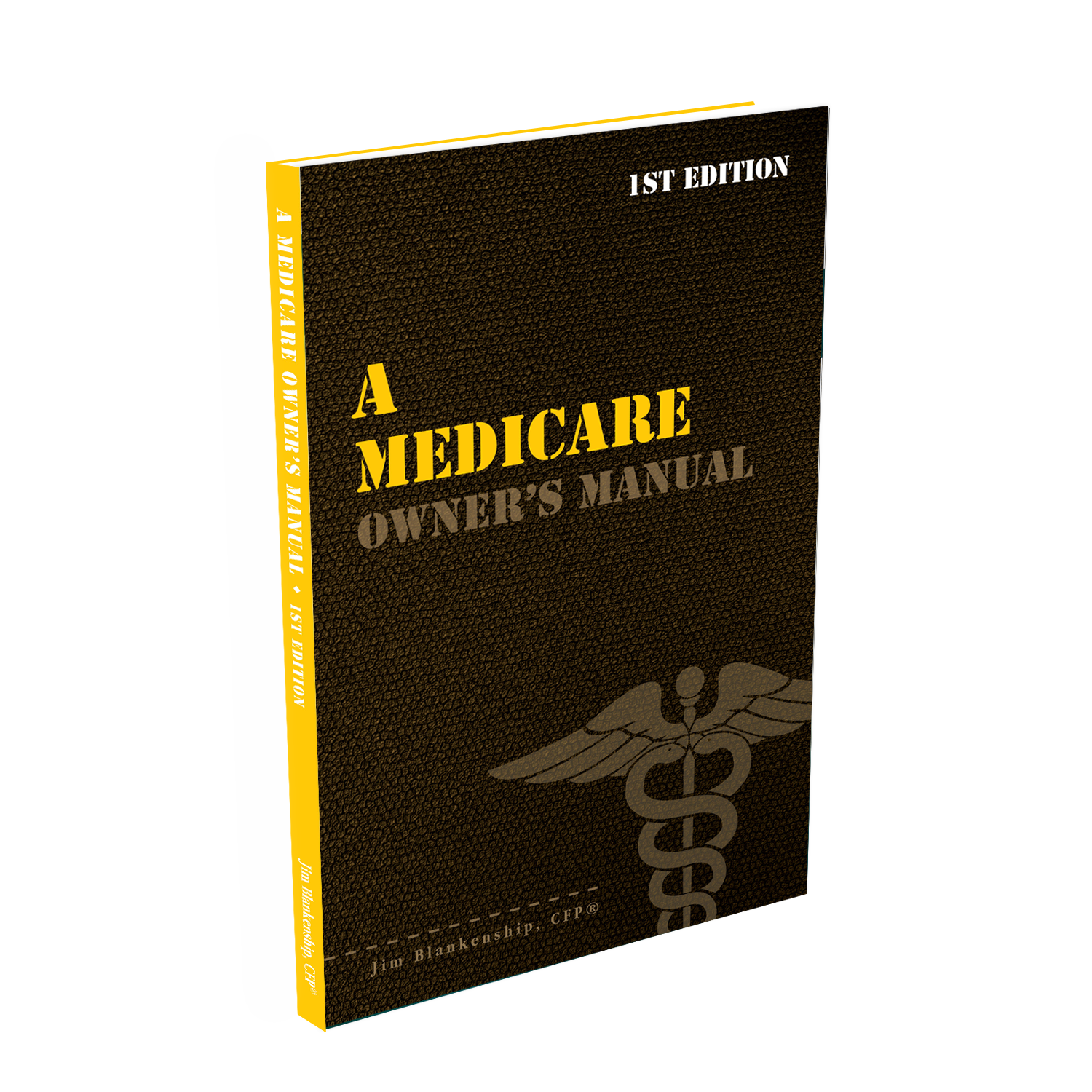 A Medicare Owner’s Manual, is updated with 2020 facts and figures. This manual is available on
  Social Security for the Suddenly Single can be found on Amazon at
  Sterling’s first book, Lose Weight Save Money, can be
  An IRA Owner’s Manual, 2nd Edition is available for purchase on Amazon. Click the link to choose the
 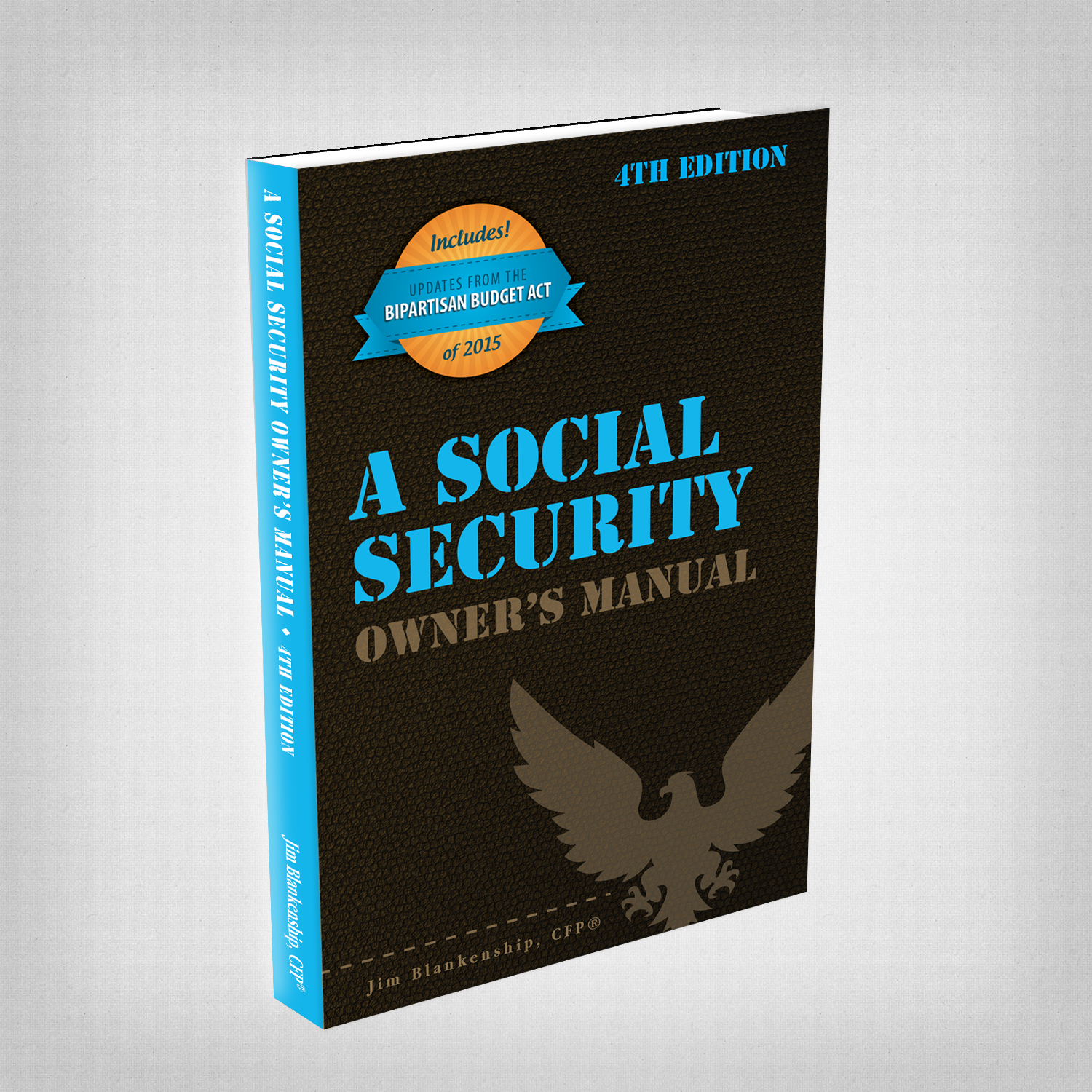 Jim’s book – A Social Security Owner’s Manual, is now available on Amazon. Click this link for the
  And if you’ve come here to learn about queuing waterfowl, I apologize for the confusion. You may want to discuss your question with Lester, my loyal watchduck and self-proclaimed “advisor’s advisor”.