Getting Your Financial Ducks In A Row Rotating Header Image

social security survivor benefits

When to File For Social Security Benefits

Four different machine filesImage via Wikipedia

All future Social Security recipients face this question at some point:  When should I file for benefits?

As you are likely aware, age 62 is the earliest that you can file for benefits.  By filing at this age, you will begin receiving your benefit at a reduced amount – perhaps as much as 30% reduced.

Waiting to file until your Full Retirement Age (FRA) will allow you to receive the full benefit amount, without reductions.  You could also wait until age 70 to file for benefits, which would result in an overall increase to your monthly benefit amount, by as much as 32% in some cases.  Granted, you will have foregone several years’ worth of payments if you wait to file at some age later than 62, but on average, it all works out about the same (with a few exceptions).

The way that these reductions and increases are designed is to ensure that, on average, all Social Security recipients, regardless of the age that they begin receiving benefits, ultimately receive roughly the same amount of benefits during their lifetimes.  This is all calculated by actuaries, and it involves the population’s average lifespan.

So if you start receiving your benefit earlier, even though it’s reduced you’re receiving it for a longer period of time than waiting until later.  On the other hand, if you delay filing until FRA or age 70, your benefit is greater each month, but you’ll be receiving it for a shorter period of time.  Eventually these strategies “cross over” – that is, one method begins to work more in your favor than another – at around age 82.

What I mean by that is that, filing earlier at the reduced rate will pay you more in overall benefits up to age 82, at which point the later filing ages will begin paying you more over your lifetime.  If you take into account the annual cost-of-living adjustments (COLAs), the break-even point is actually quite a bit lower, possibly as early as age 76.  This is due to the fact that the COLA is a percentage applied to your monthly benefit – and if your monthly benefit is reduced by filing early, your COLA adjustments will be smaller as well, and vice versa when you file later.

So if you plan to live past age 76, it most likely is in your best interest to wait until the latest point to file for your benefit.  And if you need more reasons to consider delayed application, read on.

Survivor Benefits

One additional reason that you might want to delay applying for your benefit is if you have family members that will depend upon your benefit upon your passing.  This is due to the fact that your survivors’ benefits are based upon the actual benefit that you were receiving at your death.  So, if you delayed filing for benefits and therefore received a higher benefit amount, your surviving spouse (and other family members, if eligible) will receive a higher benefit amount for the remainder of his or her life, assuming that the Survivor Benefit is greater.

This gives you another reason that delaying benefits could be the better option.  Otherwise, if your benefit is the same as or smaller than your spouse’s benefit, or if you don’t have a spouse, then it’s up to you: if you think you’ll outlive the average, it’s better to wait.  If you don’t think you’ll live that long, then start as early as you like.

* The above review doesn’t take into account a situation where you may still be working while receiving Social Security retirement benefits.  I’ll cover that in another article.

Enhanced by Zemanta

The Social Security Survivor Benefit – Part 2

Ida May Fuller, the first recipient
Image via Wikipedia

Note: you can find the first part of this discussion of Social Security Survivor Benefits at the link.  Part 1 covered the basics of Survivor Benefits, and this article covers other considerations with the Survivor Benefit, including non-spouse survivor’s benefits and coordinating the Survivor Benefit with your own benefit.  As mentioned in the prior articles, don’t expect to fully understand these calculations and definitions in the first run-through. Check over the other articles (Part 1 here, Spouse Benefits here and especially the further explanation of Spouse Benefits here) for more information, and post questions in the comment section if they come up.

Coordinating the Survivor Benefit With Your Own Benefit

The Survivor Benefit is exclusive of the surviving spouse’s own retirement benefit.  If the surviving spouse is eligible for a retirement benefit that is greater than the Survivor Benefit, only the greater of the two will be payable.

Technically the surviving spouse can choose between the two benefits, if he or she is eligible for both at the same time.  This can work to the surviving spouse’s advantage if the Survivor Benefit was taken early. By starting the Survivor Benefit early, the Surviving Spouse could wait to take his or her retirement benefit, allowing this retirement benefit to earn the delayed retirement credits up to age 70. This generally amounts to an increase in the retirement benefit of 8% for each year delayed beyond Full Retirement Age.

Here’s an example – Dick and Jane, both age 62 with retirement benefits available when they reach Full Retirement Age of $2,000 and $1,300, respectively.  Neither of them has filed for Social Security retirement or Spousal Benefits.  Dick has recently passed away.

If we run the calculation, we find that Dick’s current-age benefit would have been 75% of his Full Retirement Age benefit of $2,000 since he would be 62 at this date.  (You can take my word for this reduction, or you could look it up on the table in the earlier article.)  Then, if Jane was to apply for Survivor Benefits at this age, her benefit would be further reduced by the early filing, a 19% reduction from the table above.

So here’s the calculation for the Survivor Benefit:  Dick’s Full Retirement Age Benefit is $2,000, reduced to 75%, or $1,500.  That amount is then reduced by the 19% reduction factor, since Jane is filing early for Survivor Benefits, to total $1,215.

Notice that Jane’s own benefit at Full Retirement Age would be greater than this reduced Survivor Benefit – but at this point, her own benefit would be 75% of $1,300, or $975.  So Jane could start taking the reduced Survivor Benefit now, and then later at Full Retirement Age she could switch over to her own retirement benefit, which would be the full $1,300 (plus Cost-of-Living Adjustments), or even later to age 70 when the delayed retirement credits would apply, making her own benefit even greater.

Non-Spouse Dependents

Survivor Benefits aren’t only for spouses.  Other dependents can be eligible for Survivor Benefits as well.  These dependents include children, grandchildren, and even parents, if they qualify.  Just like leaving a sinking boat, children first.

Children

The children of a deceased Social Security participant can be eligible for a Survivor Benefit of 75% of the participant’s Primary Insurance Amount or PIA (effectively the amount of benefit that the participant would receive at Full Retirement Age) if the child is under age 18.  As long as the child was the dependent of the deceased participant, whether his or her own son or daughter, step-child, or grandchild, and the deceased participant provided at least half of the support for the child, this Survivor Benefit is available.  The child didn’t have to live with the late parent to be eligible.

In addition, the surviving mother or father of the dependent child described above is also eligible for a Survivor Benefit at any age, equal to 75% of the Primary Insurance Amount of the deceased participant.  This benefit is available until the child or children are age 16 (no age limit if the child is disabled and entitled to benefits).  The only remaining qualification is that the surviving spouse and the deceased participant must have been married for at least 9 months (less if the death is accidental).  A divorced spouse can receive this benefit if he or she was married to the decedent for at least 10 years.

Parents

The parents of a deceased participant may be eligible for Survivor Benefits as well, if they were considered dependents of the deceased.  If the parents were receiving more than half of their support from the deceased participant and they are over age 62, they can be eligible for this benefit.

If there is only one parent surviving the participant, the Survivor Benefit is equal to 82.5% of the Primary Insurance Amount of the deceased participant.  If there are two surviving parents and both are eligible, each would receive a benefit of 75% of the Primary Insurance Amount.

This benefit is exclusive to any retirement benefit that the parents may have available to them.  If the parent is eligible for a retirement benefit that is greater than the Survivor Benefit, he or she (or both of them) may receive the Survivor benefit at age 62 (with no reduction) and then later switch over to the retirement benefit at Full Retirement Age or later.

Maximum Family Benefit

Each of these Survivor’s Benefits could be limited by a Maximum Family Benefit that each family unit must adhere to.  Essentially there is a limit prescribed by the Social Security Administration on the amount of benefits, based upon the deceased participant’s Primary Insurance Amount (a good explanation of the Primary Insurance Amount and Full Retirement Age can be found by clicking this link).  The Maximum Family Benefit ranges between 150% and 180% of the Primary Insurance Amount.  Once total benefits exceed the limit, each recipient’s benefit is reduced by the same ratio down to the limit.  For a detailed explanation of the Maximum Family Benefit, click the link.

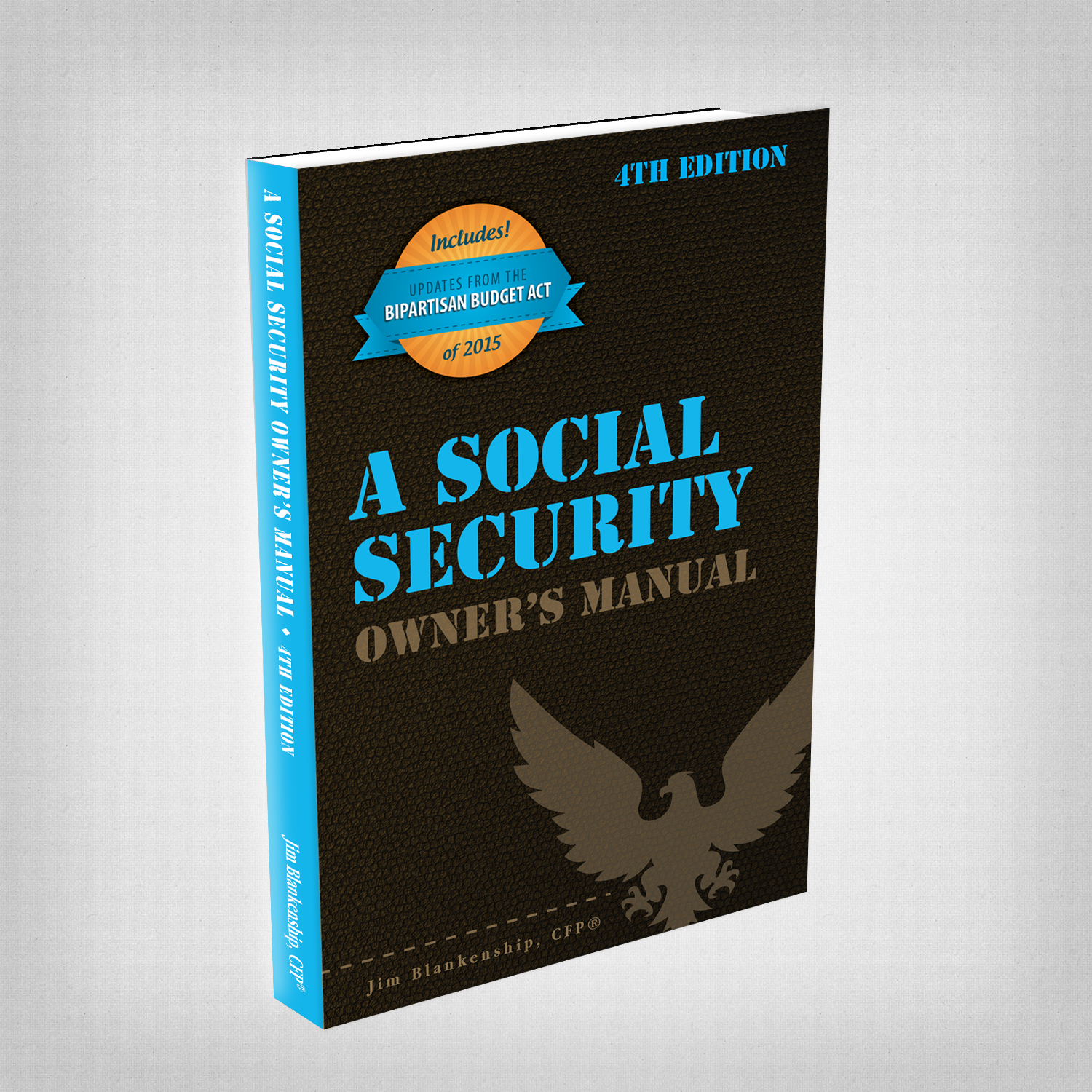
So that completes our discussion of Survivor Benefits.  For more information on any of these factors, click the links within the text above – and you can also find all of this information in the book A Social Security Owner’s Manual.  If you have comments and questions, I invite you to leave post them below and we’ll try to work out answers for you.

Enhanced by Zemanta

The Social Security Survivor Benefit – Part 1

Social Security Poster: widow
Image via Wikipedia

In a previous article we reviewed the very confusing  Social Security Spousal Benefit.  That article raised a lot of questions from readers about another confusing provision of the Social Security system: the Survivor Benefit.

As with all of these discussions, don’t expect to immediately understand it – this stuff is complicated, and even the Social Security staff often have difficulty explaining it.  Read through this carefully, see the referenced articles for background, and then re-read as needed.  And ask questions if you have them.

The Survivor Benefit is not related to the Spousal Benefit, although certain portions of the article with further explanations of the Spousal Benefit will be useful to review as we discuss the Survivor Benefit.

To start with, there are two benefits available to the spouse of a deceased Social Security participant.  The first is a small death benefit, amounting to $255 in a one-time payment.  The second is the Survivor Benefit, which is a lifetime benefit based upon the deceased participant’s benefit amount at his or her current age.

The Survivor Benefit is generally equal to the deceased worker’s benefit amount (if he or she was collecting benefits at death), and then reduced depending upon the surviving spouse’s age.  This is similar to the reduction that is applied to regular retirement benefits.  One major difference is that Survivor Benefits can be claimed as early as age 60, rather than age 62 as with regular retirement benefits.  At age 60, the Survivor Benefit is reduced to 71.5% for all dates of birth (we’ll get to more on this later).

In addition to the fact that the Survivor Benefit can be received two years earlier than the normal age of 62, the table for Full Retirement Age (FRA) is shifted by two years:

Year of Birth Survivor’s FRA
1939 or before 65
1940 65 and 2 months
1941 65 and 4 months
1942 65 and 6 months
1943 65 and 8 months
1944 65 and 10 months
1945-1956 66
1957 66 and 2 months
1958 66 and 4 months
1959 66 and 6 months
1960 66 and 8 months
1961 66 and 10 months
1962 or later 67

This means that your Full Retirement Age for Survivor Benefits could be offset by a couple of years from that for your own retirement benefit.

Calculation

Now to add some more complexity to the situation.  In order to calculate the Survivor Benefit, we have two factors to consider:

1. The amount of benefit that the deceased spouse would be receiving had he or she survived to this age; and

2. The age of the surviving spouse.

The First Factor: Benefit of the Deceased Spouse

When determining the value of the First Factor, you first need to know whether or not the deceased spouse was currently receiving benefits at the time of his or her death.  If so, the First Factor is equal to the present benefit that the deceased spouse was receiving at the time of his or her death plus any Cost of Living Adjustments that would have been applied if time has passed between the death and the survivor applying for benefits.

It’s important to note here that when the deceased spouse was already receiving benefits, any reductions or increases that had been applied are also applied to the Survivor Benefit.  For this reason, it’s critical to consider the implications when taking retirement benefits early – doing so can permanently reduce any Survivor Benefit that your spouse might receive should you die first.

On the other hand, if the deceased spouse is not already receiving benefits, the First Factor is the amount that the decedent would have received at the current age, if he or she were still living.

This makes the whole process a lot more complicated to understand, but here’s how it works: If the decedent spouse would have been at Full Retirement Age (FRA) at the time that the survivor applies for benefits, then the First Factor of our equation is based upon his or her Primary Insurance Amount, or PIA.  If you’ll recall, the Primary Insurance Amount is the amount of benefit that an individual receives in Social Security benefits at Full Retirement Age.

If the deceased spouse would have been younger than Full Retirement Age when the surviving spouse is filing for benefits, the First Factor is reduced from the Primary Insurance Amount.  Likewise, if the deceased spouse would have been older than Full Retirement age when the Survivor Benefit is applied for, there is an increase applied to the Primary Insurance Amount.  These reductions and increases are explained more completely via the tables in the article that provides further explanations of the provisions of the Social Security system.

The First Factor amount should be relatively easy to come up with, either from prior statements or by giving in and calling the Social Security Administration and getting the proper number.

So now that we have the First Factor figure, let’s move on to the Second Factor.

The Second Factor: Age of the Surviving Spouse

As mentioned previously, the Survivor Benefit can be available as early as age 60.  And as with all Social Security benefits, filing at an age earlier than Full Retirement Age (FRA) will result in a reduction of benefits, with a graduated elimination of the reduction as the surviving spouse approaches the Full Retirement Age for Survivor Benefits.

The reductions at various ages are listed in the table below by the surviving spouse’s year of birth:

Year of Birth 60 61 62 63 64 65 66 67
1939 or before -28.5% -22.8% -17.1% -11.4% -5.7% 0.0%
1940 -28.5% -23.0% -17.5% -12.0% -6.4% -0.9%
1941 -28.5% -23.2% -17.8% -12.5% -7.1% -1.8%
1942 -28.5% -23.3% -18.1% -13.0% -7.8% -2.6%
1943 -28.5% -23.5% -18.4% -13.4% -8.4% -3.4%
1944 -28.5% -23.6% -18.7% -13.8% -9.0% -4.1%
1945 to 1956 -28.5% -23.7% -19.0% -14.2% -9.5% -4.7% 0.0%
1957 -28.5% -23.9% -19.3% -14.6% -10.0% -5.4% -0.8%
1958 -28.5% -24.0% -19.5% -15.0% -10.5% -6.0% -1.5%
1959 -28.5% -24.1% -19.7% -15.3% -11.0% -6.6% -2.2%
1960 -28.5% -24.2% -19.9% -15.7% -11.4% -7.1% -2.8%
1961 -28.5% -24.3% -20.2% -16.0% -11.8% -7.6% -3.5%
1962 or later -28.5% -24.4% -20.4% -16.3% -12.2% -8.1% -4.1% 0.0%

As you can see, at age 60, the reduction is 28.5% for all dates of birth.  Then the reduction factor is gradually eliminated up through the Survivor Benefit Full Retirement Age.

The Calculation

Now that we have our two factors, the amount of the deceased spouse’s benefit and the age/reduction factor for the surviving spouse, we move on to the actual calculation. The reduction factor is simply applied to the deceased spouse’s benefit.

For example, let’s say that the deceased spouse’s benefit would have been $1,500, and the surviving spouse is 62 years old.  If the surviving spouse were to take the Survivor Benefit beginning today, the $1,500 would be reduced by 19.0%, to $1,215 (the 19.0% figure is based upon the table above – the surviving spouse is 62, so he or she was born in 1949 or 1950).  Waiting another four years would allow the surviving spouse to receive the full benefit (with no reduction), plus any Cost-of-Living Adjustments (COLAs) that would be applied between now and that date.

Additional Facts About the Survivor Benefit

There are a few more facts that could change the situation completely.

First of all, if the surviving spouse has remarried before age 60, the Survivor Benefit is no longer available to him or her.  If the surviving spouse re-marries before age 60 and then subsequently divorces or is subsequently widowed again, the Survivor Benefit is once again available. And if the surviving spouse has more than one late spouse, he or she is eligible to receive Survivor Benefits based upon the highest possible benefit from any of the prior spouses.

In addition to the Survivor Benefit that is available as early as age 60, there is also a Survivor Benefit available for a (potentially) much younger surviving spouse if that survivor is caring for a child aged 16 or younger.  This benefit is equal to 100% of the benefit that the decedent-spouse was receiving at his or her death, or the Primary Insurance Amount on his or her record, if he or she was not currently receiving benefits at death.

All of the benefits are dependent upon the fact that the deceased spouse has earned adequate quarters of credit with the Social Security system.  For full benefits, the deceased would need to have earned at least 40 quarters, or ten years of work earning (for 2011) $1,120 per quarter or $4,480 for the year.  For the surviving spouse caring for a child younger than age 16, reduced benefits are available if the deceased spouse had earned at least 6 quarters of credit in the three years prior to his or her death.  Any amount of quarters between the minimum of 6 and the maximum of 40 would allow for a phased increase in the benefit amount.

If a person was married to the deceased spouse for at least 10 years and was divorced, the Survivor Benefit is available just the same as if the couple had not divorced (as long as he or she has not remarried prior to age 60, as mentioned above).

Lastly for now, if the surviving spouse is disabled, the Survivor Benefit could be available as early as age 50, with the same reduction as for a non-disabled surviving spouse at age 60, 28.5%.

Okay, this is enough for Part 1.  In Part 2, I’ll cover some of the other types of Survivor Benefits – for children and other beneficiaries – as well as to review coordinating the Survivor Benefit with the surviving spouse’s own benefit.  If you’ve got more questions, please leave them as comments, or if you’d like more information I invite you to check out my book, A Social Security Owner’s Manual.

Enhanced by Zemanta

One More File and Suspend Option

Spider's egg sac
Image via Wikipedia

We’ve discussed the file and suspend option in multiple articles, but did you know that there is one more option for file and suspend. This is one that provides you with the opportunity to earn delayed retirement credits (DRCs) on your Social Security benefits, even if you started receiving benefits early.

File and suspend is generally an option that is used by a married couple – providing a method by which one of the two can receive Spousal Benefits while the other delays receiving benefits until later, earning DRCs.  (For more on this, see this article on Spousal Benefits.)

This additional option is available at Full Retirement Age (FRA), just like otherwise.  But what’s different about this is that the suspend option is used when you’ve already been receiving benefits, most likely early at a reduced rate, and by suspending at FRA you make yourself eligible to earn Delayed Retirement Credits (DRCs) on your present benefit.

Here’s how it works: Say you started receiving your benefit early, at age 62.  By doing so you permanently reduced your benefit.  If you’d waited until Full Retirement Age (FRA), you could have received a benefit of $2,000, but by taking the benefit early you are now receiving a reduced amount, $1,500.  And ever since that time, you have been kicking yourself because you had plenty of money to keep you going, and you wished you had waited and delayed your benefit.

Without overcomplicating this with Cost-of-Living Adjustments (COLAs), let’s say you’ve now reached Full Retirement Age (FRA).  Having reached FRA, you now have the option to enact the file and suspend option.  This means that you can now suspend receiving your benefit and begin earning Delayed Retirement Credits of 8% per year, between now and your 70th birthday.  This means that your overall benefit could be increased by as much as 32%, to a total of $1,980.  This could be a way to bump up your future benefits, as well as your surviving spouse’s Survivor Benefit.

In the event that you try to put this one into action, expect for some opposition from Social Security staff.  Even in the most-accepted of circumstances, Social Security staff often claim to know nothing of the file and suspend option.  So one way to help yourself in talking to the representatives is to refer to the webpage at http://www.socialsecurity.gov/retire2/suspend.htm.  I’ve copied the text below for your reference:

Voluntary Suspension of Retirement Benefits

If you have reached full retirement age, but are not yet age 70, you can ask us to suspend retirement benefit payments.

  • If you apply for benefits and we have not yet made a determination that you are entitled, you may voluntarily suspend benefits for any month for which you have not received a payment. Your request to suspend benefits may include any retroactive benefits that might be due.
  • If you are already entitled to benefits, you may voluntarily suspend current or future retirement benefit payments up to age 70 beginning the month after the month when you made the request.Reminder: We pay Social Security benefits the month after they are due. If you contact us in June and request that we suspend benefits, you will still receive your June benefit payment in July.

You do not have to sign your request to suspend benefit payments. You may ask us orally or in writing.

Note: If you started receiving Social Security benefits less than 12 months ago and you changed your mind about when they should start, you may be able to withdraw your Social Security claim and re-apply at a future date. If your request is approved, you must repay all the benefits you and your family received based on your retirement application.


Before you make your decision

There are some things you need to know about what will happen if you suspend your retirement benefits.

  • If you are enrolled in Medicare Part B (Supplementary Medical Insurance), you will be billed by the Centers for Medicare & Medicaid Services (CMS) for future Part B premiums.These premiums cannot be deducted from your suspended retirement benefits. If you do not pay the premiums timely, you may lose your Part B Medicare coverage. (You will have the option of automatically paying the bill from an account at your bank or financial institution.)

    Exception: If you also receive benefits as a spouse or ex-spouse, we can deduct your Part B premium from that benefit payment.

  • If you also receive Supplemental Security Income (SSI) benefits, suspending your retirement benefits will make you ineligible for SSI.
Enhanced by Zemanta