
The SIMPLE Plan is a type of retirement account for small businesses that is simpler (ah hah!) to administer and more portable than the 401(k) plans that are more appropriate for larger businesses. SIMPLE is an acronym (probably a backronym, more likely) which stands for Savings Incentive Match PLan for Employees.

Photo credit: coop
A SIMPLE typically is based on an IRA-type account, but could be based on a 401(k) plan. What we’ll cover here is the IRA-type of SIMPLE plan. The difference (with the 401(k)-type) is that there are more restrictions on employer activities, and less room for error (as can be the case with 401(k) plans).
A SIMPLE Kind of Plan
Much like a regular 401(k) plan, a SIMPLE Plan is an agreement between the employer and employee where the employee agrees to a salary deferral. This deferral effectively reduces the employee’s taxable take home pay, and the employer then contributes the deferred amount into the SIMPLE IRA account on behalf of the employee. These contributions must be made to a SIMPLE IRA account, not a Traditional IRA.
To be eligible for a SIMPLE Plan, the employee must have received at least $5,000 in compensation during any two years (need not be consecutive) prior to the current tax year, and can reasonably expect to receive at least $5,000 in compensation in the current tax year (calendar year). For the purposes of the SIMPLE Plan, a self-employed individual would be considered an employee if she received earned income as described (at least $5,000).
Also, certain classes of employees can be excluded from participation, such as union members subject to collective bargaining, or nonresident aliens who have received no compensation from US sources. The employer can have no more than 100 employees who are in the class that are allowed to participate in the SIMPLE plan.
No eligible employee may “opt out” of participation – however, eligible employees are not required to defer salary into the plan. This just means that they would have no deferral contributions or company matching contributions to the plan while they choose not to defer. Nonelective contributions by the employer would still be added to the account, regardless of whether the eligible employee defers salary for that year.
Types of Contributions
There are three different types of contributions that can be made to a SIMPLE Plan – salary deferrals, employer matches, and nonelective contributions.
Salary Deferrals are much the same as 401(k) salary deferrals. The employee decides to defer a percentage of his salary, which reduces his taxable take-home pay, and the deferral is contributed to a SIMPLE IRA on his behalf.
Employer Matches are also similar to the same activity in a 401(k) plan. The employer elects to match the employee contributions, dollar-for-dollar, up to 3% of the employee’s salary, although this amount can be less. (see Limits below for additional information)
Nonelective Contributions – in some cases, the employer may decide to make contributions on behalf of ALL eligible employees, rather than only for those that are participating in the SIMPLE Plan. In this case, the employer has opted for making the Nonelective Contributions instead of Employer Matching Contributions. These Nonelective Contributions are for 2% of employee salary.
Limits
For Employer Matching contributions, the employer has some leeway in making the contributions for a particular tax year, but there are quite a few restrictions on how this leeway can be applied:
- as described above, in general the matching contribution must be dollar-for-dollar up to 3% of the employee’s deferral for the year; however –
- the matching contribution can be reduced to as little as 1% (or any amount between 1% and 3%) for a tax year as long as the amount is not reduced below 3% for more than two out of five tax years (including the current tax year) and the employees are informed in a timely fashion of the reduction in match.
- the Nonelective Contribution of 2% can be substituted for the Employer Matching Contribution for any given year as long as employees are notified.
Contributions (for 2016-2018) are limited to $12,500 in employee deferrals, plus a catch up provision of $3,000 if the employee is age 50 or older during the tax year. (These figures are subject to annual adjustment due to inflation.)
Employer matches are limited to the amount the employee defers, up to 3%.
Note that SIMPLE deferral is counted toward the overall 401(k) limit ($18,000 for 2017; $18,500 for 2018; $24,000 and $24,500 respectively if over age 50) in deferrals for the tax year. If an employee is subject to more than one retirement plan, this limit applies to all deferrals to 401(k)’s and SIMPLE plans for the tax year.
Gallimaufry*
There are a few additional things of interest regarding rollovers and the SIMPLE plan that must be pointed out:
- After you’ve had the SIMPLE IRA open for 2 or more years, you are allowed to rollover other IRA funds into a SIMPLE IRA. Before that, you are not allowed to rollover IRA or other accounts (besides another SIMPLE IRA) into your SIMPLE IRA.
- In order to rollover amounts from your SIMPLE IRA into a Traditional IRA, the account must have been in existence for at least two years; otherwise your only option for a rollover is into another SIMPLE IRA (which then inherits the earlier SIMPLE IRAs starting date for rollover purposes).
- The same two-year rule applies to Converting a SIMPLE IRA to a Roth IRA. There is no SIMPLE Roth IRA.
- Early distributions (not subject to any of the exceptions) that occur during the first two years of the account’s existence are subject to a 25% additional penalty (instead of the usual 10% penalty for other IRA accounts).
Other than those restrictions, all of the other distribution rules apply to SIMPLE IRAs that apply to Traditional IRAs: distributions are taxable as ordinary income; with some exceptions, qualified distributions can not begin until age 59½; rollovers and trustee-to-trustee transfers are allowed as non-taxable events (subject to the two year rule above); conversions to Roth IRAs are allowed without penalty (subject to the two-year rule); and early distributions not subject to exception are subject to an additional 10% penalty (25% in the first two years as described above).
(* a hodgepodge of additional stuff)
Contest for today: The first person to leave a comment that explains why I used the particular picture above for this article will receive a pound of our delicious virtual back-bacon. Extra points if you can mention something unique about that particular picture, as well. Best of luck to all participants! (Canadians are welcome to guess this time as well!) :-)
Photo by Thomas Hill
 As you learn about Social Security and your possible benefits, there are several unique Social Security terms that you should understand. Below is a list and brief definitions of the most important of these Social Security terms.
 1/1/2018 Note: Recharacterization of Roth conversion is no longer allowed as of tax year 2018. The last tax year that you could recharacterize Roth conversions is 2017. See

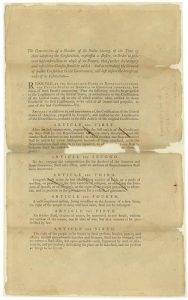 There is a set of Rights that are available to all of us as taxpayers – the Taxpayer Bill of Rights. This group of basic rights is available to us so that the government (and specifically the Treasury Department and the IRS) don’t over-step their boundaries when dealing with taxpayers.
 There are special rules that apply for Social Security benefits when you are divorced with children. While the ex-spouse is living, there is a discriminatory effect on benefits, but after the ex-spouse dies, a surviving ex-spouse with children under age 16 has one advantage over a surviving ex-spouse with no children. (The age of the child is not a factor if the child is permanently disabled and the disability began before age 22.)
 Quick – what’s the earliest age you can withdraw money from a retirement account without paying a penalty? Is it 59½?
 Most of us realize that donating money and goods to a charity can be beneficial on our tax returns. But did you know that traveling for charity can also be deducted? It’s true – with some limitations, of course.
 For certain types of workers, specifically someone employed as a public safety employee, there is a special exception to the normal distribution rules. For a public safety employee, retirement plan withdrawal can begin without penalty as early as age 50, rather than
  Social Security Survivor Benefits can be a critical lifeline for surviving spouses. The interaction of survivor benefits with your own benefits can be a bit confusing though. Does starting to receive one benefit affect your future amount of the other benefit? How about vice-versa? There’s a lot written about the topic in Social Security’s POMS manual, but it becomes very simple after you study it a bit.
 After my post last week (
 For all your good intentions, you’ve found yourself in a position where you owe taxes to the IRS that you can’t pay right away. All is not lost, there are ways to deal with this situation that can be helpful if you can’t pay. The IRS has several methods you can use to arrange a plan to pay the IRS taxes that you owe over time.
 If you’re familiar with the remarriage rule for Social Security survivor benefits, you likely know what I’m talking about. This is, in my opinion, quite possibly the dumbest rule that we have in the whole Social Security system. There are several really dumb rules, but this one takes the cake.
 You’ve heard the ads on radio and TV:
 Sterling Raskie, MSFS, CFP®, ChFC®
 The latest in our Owner’s Manual series, A 401(k) Owner’s Manual, was published in January 2020 and is available on
  A Medicare Owner’s Manual, is updated with 2020 facts and figures. This manual is available on
  Social Security for the Suddenly Single can be found on Amazon at
  Sterling’s first book, Lose Weight Save Money, can be
  An IRA Owner’s Manual, 2nd Edition is available for purchase on Amazon. Click the link to choose the
  Jim’s book – A Social Security Owner’s Manual, is now available on Amazon. Click this link for the
  And if you’ve come here to learn about queuing waterfowl, I apologize for the confusion. You may want to discuss your question with Lester, my loyal watchduck and self-proclaimed “advisor’s advisor”.