
 Recently I had the privilege to read my colleague Kathryn B. Hauer’s book, Financial Advice for Blue Collar America. Kathryn comes from a blue collar family herself. Her father was a steelworker, and her mother a nurse in the days when nursing didn’t require a college education. With this experience, Kathryn has always had a passion for helping folks with similar backgrounds. This book is an outgrowth of that passion.
“Blue collar” used to mean difficult life and circumstances for the worker and his family. These careers have transitioned in the past several decades, however. These days blue collar careers include highly-trained, very well paid positions. These careers range from carpenters, ironworkers and pipefitters to police officers, other safety workers and enlisted military personnel. The pay ranges for many of these careers can be higher than many white collar workers, without the drag of student loans.
Kathryn Hauer wrote this book in response to the opportunities that folks in blue collar careers have these days. Throughout the book, she points out how the standard of “college is necessary to succeed” no longer applies across the board. Opportunities for new entrants into these careers have never been more abundant nor promising than they are today. With these opportunities comes the need for financial advice to folks who haven’t traditionally sought advice.
The problem with the traditional delivery of financial advice is that many (most?) financial advisors do not have an understanding of the culture. Without this upbringing seasoning their experience, many financial advisors have difficulties relating to this group in a meaningful way. Hauer demonstrates her deep understanding of the issues facing blue collar workers throughout her book. She has blue collar experience in her own personal background, having served in the military, as well as a stint building concrete nuclear waste storage facilities prior to her current work as a financial advisor.
Financial Advice for Blue Collar America answers the call for this advice, providing sound recommendations in context with the worker’s background. Examples fit in with the common financial wants and needs of the blue collar worker. The advice given is a good place for anyone, in any career, to start, but the context really makes it come to life for someone in a blue collar job. The appendices provide a wealth of useful references to continue the educational experience.
If you are currently working in or considering a blue collar career, you can definitely benefit from Hauer’s book. You’ll find the material that can get you started toward financial success, as well as provide yourself and your family with a great foundation of knowledge as you plan for future financial needs. Kathryn Hauer does a great service to America’s blue collar workers with this book, bridging the gap to give wonderful advice in a style that meets their needs.
As an advisor I learned quite a lot about issues that I hadn’t considered that are paramount for blue collar workers. I never realized how this group’s needs weren’t being met with our traditional delivery of advice. I’ll use this knowledge in the future as I attempt to provide similar service to blue collar America in our practice. This is an important component of our society that has been left to fend for themselves (largely) by the traditional financial planning community. I hope I can help – as I know Kathryn does, every day. Thank you, Kathryn!
 Recently I wrote about how the first Required Minimum Distribution (RMD) has a
  If you rent out a room to others using airbnb or a similar site, if you drive your car for Uber (or an alternative), or if you otherwise take part in the sharing economy, the money you earn may be taxable. (Psst: Even if you get paid in cash without any record of the transaction, you still may be liable for income tax on the earnings.) This is true whether this is a one-time thing or if you treat it like a side-gig. Plus, if you don’t earn cash but rather get something else of value in exchange (such as a barter transaction), there is likely taxable income on the transaction.
 If you have reached age 70½ in 2016 and you have an IRA or other retirement plan (such as a 401k) you must take a distribution from the account by April 1, 2017. This special deadline is applicable only for your first year of required distributions. Every subsequent year you must withdraw your required distribution by the end of the calendar year.
 Adjusting withholding can sometimes produce a surprise.
 A common situation that we run across is when someone would like to make early withdrawals from an IRA or 401k plan. As you might expect, there is taxation of the money withdrawn in most cases. There can be other taxes, and certain early withdrawals can be tax-free. The nature of the taxation depends on the circumstances around your early withdrawals.
 Do-It-Yourself or DIY Income tax filing software is very common, pervasive and easy-to-use these days. Many folks are taking advantage of this option for filing their taxes each year – but it’s not infallible. There is only so much that can be automated with the software. Certain things you’ll need to know for yourself. If you don’t know these things ahead of time you’ll need to know how to fix them later.
 This tax season the IRS has been tracking a scam that targets certain employers. It’s a particularly nasty one, hitting where the email targets clerical employees, impersonating someone higher in the organization, asking for W-2 information. With this information the scammer can steal identities.
 Recently the IRS published a Special Edition Tax Tip which debunks some very common myths about your income tax refund. You may find some of these surprising. These myths are pervasive and can lead you astray if you believe them. In my experience the information in the Tip below is great advice for finding information about your tax refund.
 How does the substantial earnings years of credit work for Windfall Elimination Provision?
 After all of the changes that have been put in place for Social Security benefits in the past year, there is still one situation that allows for some planning. Knowing about this situation can help if you happen to be in the right circumstances.


 e today issued the 2017 optional standard mileage rates used to calculate the deductible costs of operating an automobile for business, charitable, medical or moving purposes. These rates are for use on your 2017 income tax return, filed by April 2018.
 Quick, how do you find out what your balance is at the IRS? Call somebody? Wait for a paper notice? Who knows??
 So – you’ve begun your Series of Substantially Equal Periodic Payments (SOSEPP) from your IRA to satisfy your §72(t) requirement. Allofasudden, something happens that causes you to make a change to your payment – either purposely or through unforeseen circumstances. What happens? You were supposed to keep the same payment for the longer of 5 years or until age 59½. What do you do now?
 tax filing requirements for 2017 is that employers must adhere to an earlier W2 filing date than in years’ past. For 2017,all W2 and W3 (employer records) must be filed with the Social Security Administration by January 31.
 If you delay filing for your Social Security benefit, for each month that you delay you will earn delayed retirement credits. The increase for each month of delayed retirement credit is 2/3% (0.667%) for every month. This equates to 8% in delayed retirement credits for every year of delay. But when are these credits applied to your benefit?
 Sterling Raskie, MSFS, CFP®, ChFC®
 The latest in our Owner’s Manual series, A 401(k) Owner’s Manual, was published in January 2020 and is available on
  A Medicare Owner’s Manual, is updated with 2020 facts and figures. This manual is available on
  Social Security for the Suddenly Single can be found on Amazon at
  Sterling’s first book, Lose Weight Save Money, can be
  An IRA Owner’s Manual, 2nd Edition is available for purchase on Amazon. Click the link to choose the
 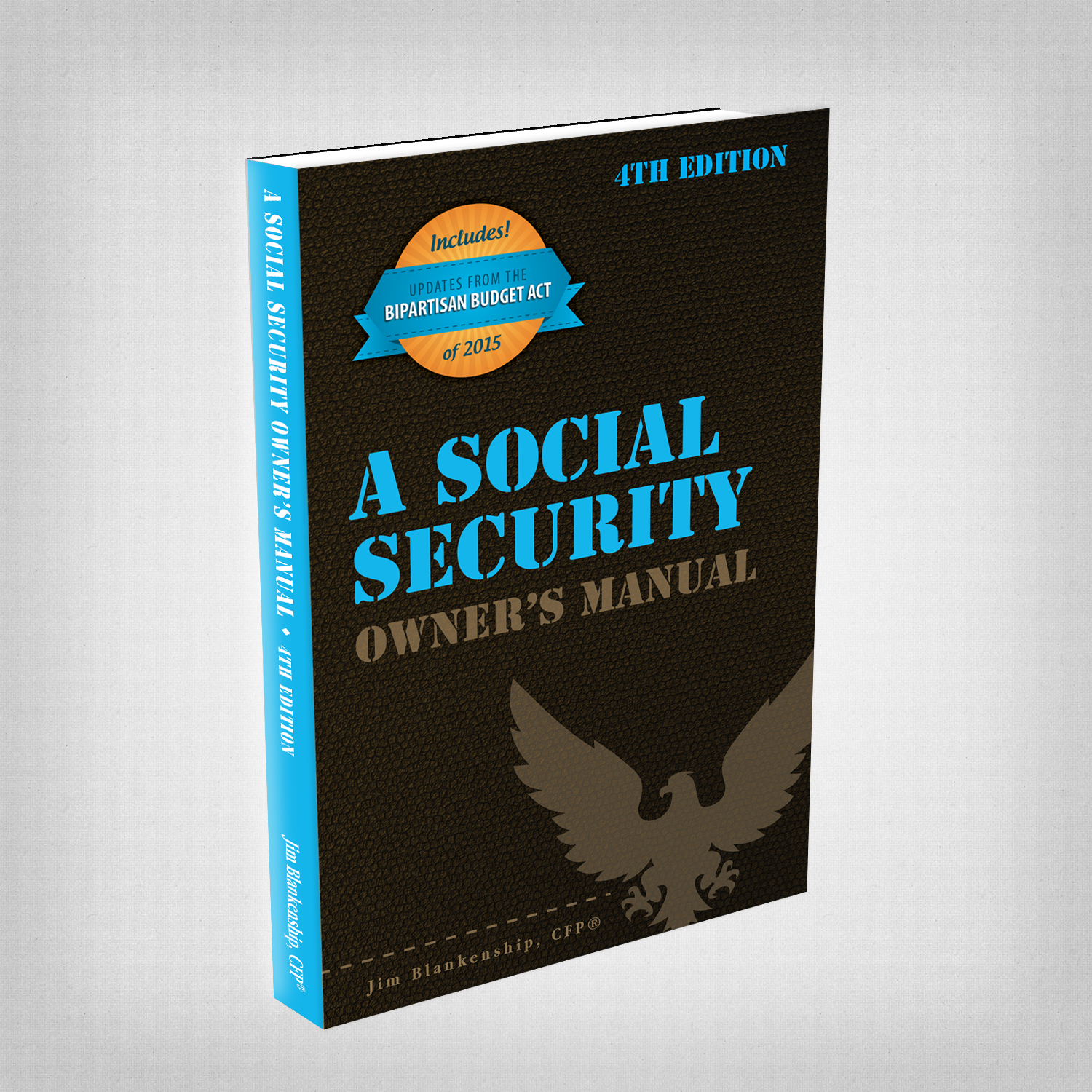 Jim’s book – A Social Security Owner’s Manual, is now available on Amazon. Click this link for the
  And if you’ve come here to learn about queuing waterfowl, I apologize for the confusion. You may want to discuss your question with Lester, my loyal watchduck and self-proclaimed “advisor’s advisor”.