Getting Your Financial Ducks In A Row Rotating Header Image

social security benefits

Restricted Application is Available via the Online Application

I learn something new almost every day.

Today (well, not today but recently), I learned something about the online application for Social Security that I didn’t know: the restricted application for Spousal Benefits is available as a choice when you apply using the online application system! (If you want more information on why a restricted application is important, see this article about Leaving Money on the Table.)

For quite a while now I’ve been telling folks that the best way to apply for the restricted application is to go to your local office.  When you get there and explain that you want to submit a restricted application for Spousal Benefits only, the first person that you talk to will likely tell you that you can’t do this, because your own retirement benefit is greater than half of your spouse’s PIA, or something like that.  Then my advice has been to ask for a supervisor and explain it again, and keep insisting that you’re eligible to do this (make sure that you are, first of course!), until you get the right person to agree with you.

As it turns out, for some time now you’ve been able to select this option via that online application.  See below – this is a screenshot of the application system (sorry it’s not very legible).  The last part in bold says:

If you are eligible for both retirement benefits and spouse’s benefits, do you want to delay receipt of retirement benefits?

bene app screenshot restricted app

It’s clear that this option gives you the ability to delay the receipt of your retirement benefit and only receive the spouse’s benefit, assuming that you’re at least at Full Retirement Age and your spouse has applied for his or her benefit.

This is great news – since now you won’t have to go through the hassle described above in order to submit a restricted application for spousal benefits.

An additional, likely unintended positive to this development is that you could use this blog to show the first person you talk to (if you still opt to visit the local office) in order to help prove your eligibility for this option.

How to Reduce or Eliminate Windfall Elimination Provision Impact to Your Social Security Benefit

Basic WEP encryption mechanism

In prior articles we have discussed the Windfall Elimination Provision (WEP) which has the effect of reducing a portion of your Social Security retirement benefit if you’ve worked in a job that was not covered by Social Security which also provides a pension.  This article deals with two ways that you can remove the impact of the WEP from your benefit – neither of which is simple, and neither of which can be done after you’ve retired.

The two methods are:

  1. Add years of “substantial earnings” to your record
  2. Take a lump sum distribution from your pension before you are eligible to receive the pension.

Adding Substantial Earnings Years

If you have the opportunity to work in a job that is covered by Social Security withholding and you have “substantial earnings” from that job, each year that you work in this SS-covered job adds to your ability to begin eliminating the WEP impact.

This is not an insignificant undertaking.  Substantial earnings for 2013 is defined as $21,075 or more in earnings covered by Social Security, and this figure is adjusted annually by the Cost-of-Living increases.  Plus, it doesn’t make a difference on your WEP impact until you’ve added 21 or more years of substantial covered earnings to your record.

The good news is that if you have 30 or more years of substantial earnings in a Social Security-covered job, you’ll eliminate the WEP impact altogether.

Taking a Lump Sum Distribution of Your Pension

If you don’t have enough years with substantial earnings, there is another way that you can eliminate the impact of WEP, which again isn’t an insignificant thing to do.  If you have the ability to take a lump-sum distribution of your non-covered pension before you are eligible to receive the pension, you can eliminate WEP impact altogether.  By doing this you’ll forfeit any future pension that you might have received from the non-covered employer.

The timing on this has to be right – if you are eligible for the pension when you take the lump sum distribution, you’ll still have WEP impact.

For example, John is a teacher in a state in which teachers are not covered by Social Security and he works there long enough to build up a pension.  He decides to leave that state and go to another state where teachers are covered by Social Security.  He’s young enough that he is not yet eligible for the pension in the first state.  If he withdraws the entire pension from the first state and thereby forfeits all future claim to that pension, he will no longer have future WEP impact on his Social Security.  That is, unless he goes back to another non-Social-Security-covered job at a later point in his life.

Important points

It’s important to note that WEP impact only occurs if the pension is considered to be the primary retirement plan.  This is regardless of whether the pension is funded by the employee only, by a combination of employer and employee contributions, or solely by the employer.

If the plan is considered to be a supplemental plan (for example, as a 403(b) plan might be to a regular pension plan), then if the source of funds is solely from the employee, this plan will not produce a WEP impact.  In a case like this, the primary plan would likely produce the WEP impact anyhow, unless one of the options listed above is used to eliminate the impact.

In addition, payments from optional savings plans, such as the TSP (Thrift Savings Plan) for CSRS employees, are not considered as WEP-impacting pension payments.

If there are multiple sources of pension from the non-covered employer, only the applicable pension for WEP impact is considered when calculating the maximum WEP impact. This is because WEP impact can’t be more than 1/2 of the applicable pension amount.

Enhanced by Zemanta

Average Indexed Monthly Earnings Years

Panneau Aime la Plagne

We’ve discussed the AIME (Average Indexed Monthly Earnings) calculation before, and it’s not like anything has changed about those calculations.  It turns out that the calculation process can be a bit confusing (shocked? I think not).

The AIME is calculated using what’s known as the “base years”, which are those years between your age of 22 and 62 that occurred after 1950 (I realize most folks needing to know about this didn’t need that 1950 reference, but it’s part of the rules, so I included it).  Of those 40 years, only the 35 years with the highest earnings are used to calculate the AIME.  The earnings for each year is indexed (see the original article for details) and then the earnings are averaged.

One of the questions that comes up is how years after age 62 are handled in this process.  If earnings in subsequent years are greater (after indexing) than earnings in the earlier “top 35” that was used for the calculation, your AIME can be recalculated, which might make a change to your PIA.  So working past your age 62 can have a positive impact on the benefit that you (and possibly your family) can receive.

See the earlier article about the Primary Insurance Amount (PIA) calculation for how the AIME is used to generate the PIA.  Bear in mind that additional earnings may not have a dramatic impact on your PIA.  This is because (using 2012 figures) any amount of your AIME between $767 and $4,624 are included at the rate of 32%, and AIME amounts above $4,624 are included at only 15%.  Therefore, increases to your AIME above those amounts have only a minimal impact on your PIA.

Enhanced by Zemanta

“Swim With Jim” Radio Interview by Jim Ludwick

I recently had the honor of being interviewed on the radio by Mr. Jim Ludwick, a colleague that I admire and look up to a great deal.  Jim is a CERTIFIED FINANCIAL PLANNERTM professional, and his practice is based in Odenton, Maryland with additional offices in Washington, DC, Santa Barbara, California, San Mateo, California, and New York City.  Jim also is a fellow member of the Garrett Planning Network.

In the interview we talk very briefly about some of the important factors of Social Security that baby boomers need to address as they plan for Social Security benefits.

You can follow Jim’s radio program on BlogTalkRadio; his channel is Swim With Jim.


Listen to internet radio with Swim with Jim on Blog Talk Radio

To hear the interview, click the “Play” button above.

In the interview I mention that it can be helpful to have an advisor work with you to understand your Social Security benefits.  Members of the Garrett Planning Network are uniquely positioned to help in such matters, as we operate on an hourly basis providing financial advice, unlike most of our financial industry brethren (and sistren).  Seek out your nearest Garrett Planning Network member if you need help!

Wealth Defense: When Should You Start Social Security Benefits?

The foregoing is a re-post of an article that I wrote which was included in The Motley Fool’s Rule Your Retirement newsletter.  Enjoy!

Want to double a chunk of your retirement income? It’s easy — just delay taking Social Security by about six years!

OK, so it’s not really that simple. The time to apply for Social Security benefits is different for each individual; there is no magical “best age” for everyone. Thus, to maximize your benefit, it’s important to understand the consequences of choosing to apply at different ages.

It all starts with the most important age: your full retirement age, or FRA (see table below). If you receive your Social Security retirement benefit before your FRA, the benefit will be reduced. The biggest reduction is at age 62, the earliest you can begin receiving benefits (except for widows and widowers, who can begin survivors’ benefits at 60).

Year of Birth Full Retirement Age
1943-1954 66
1955 66 and 2 months
1956 66 and 4 months
1957 66 and 6 months
1958 66 and 8 months
1959 66 and 10 months
1960 and later 67

The more you delay applying for benefits after your FRA, up to age 70, the more your benefit will increase. At 70, the benefit no longer increases. To show how age affects Social Security, the table below displays estimated annual benefits for a person born on June 1, 1950, who earned $60,000 last year (all amounts are in future, or inflated, dollars).

Worth the Wait?

Age Annual Benefit
62 $13,764
64 $17,064
66 $21,300
68 $26,796
70 $33,048

The SSA employs really smart actuaries who have the very fun job of poring over death statistics (which may or may not involve midnight visits to cemeteries — I can’t divulge my sources). These actuaries aim to coordinate the reductions and increases with average life expectancy so that it shouldn’t matter when you take your benefit; it should work out about the same no matter when you start. But average life expectancy hasn’t quite caught up with actuarial estimates. So, since the average life is slightly less than the crossover point, it’s a bit in your favor to start early if you’re the average person who lives to the average life expectancy.

Factors to Consider

Despite what the actuaries say, there are times to delay taking Social Security to increase the chances that you’ll receive the most bang from your benefits.

Will you live longer than average? About one of every four people age 65 today will live past age 90; one in 10 will live past age 95. So if your family leans past the occasional octogenarian, add longevity to your equation. When delaying benefits, the break-even point usually ranges from age 78 to 82. It’s no coincidence the average life expectancies for men and women in the U.S. are about 76 and 81, respectively.

Will you continue working? You can receive Social Security while still earning a paycheck, but doing so before your FRA could reduce your monthly benefit, depending on how much you’re earning. This is made up for when you reach FRA, but it’s important to know so that you can plan for the benefit reductions. Also, if you continue to work while receiving benefits, you’ll continue accruing credit for your annual wages. If you have earlier years on your record with low (or no) wages, your benefit could increase.

Do you really need the money? If you’re ill, have a shortened life expectancy, or face limited resources, it may be necessary to take Social Security early. The financial calculations I do for my clients always assume the recipient will live to at least 80 and can use other resources until age 70. If one or both of these circumstances is not the case for you, it probably makes more sense to take your benefits earlier.

Do you have a spouse or dependents? The age you apply for benefits locks you into a benefit base for the rest of your life. (Technically, you can get a do-over within 12 months of filing if you give back all the money.) Your benefit base might affect your spouse’s benefit, both when you’re alive and if you die first. The benefit base can also determine payments to other family members. We’ll delve more into this next month, when we explore strategies for maximizing family benefits.

Let the Numbers Do the Talking

Want to see how application age can affect your benefit? The SSA has a collection of online Social Security calculators to help estimate your benefit amounts at various ages, which can help you in your decision-making.

Early Social Security Filing Examples

BATH, ENGLAND

Most of the examples that you see indicate that filing for Social Security benefits as late as possible is the best way to go.  However, this is not always the case, given that you’re receiving the benefit (albeit at a reduced rate) for a longer period of time.  Let’s work through some examples to show how this works.  This article will only deal with single individuals – we’ve covered spouse benefits in several other articles, it’s time to provide some guidance for single folks.

Example 1, Filing at 62 vs 66

John is single, age 62, and his benefit at Full Retirement Age (FRA) has been estimated at $2,000, so his benefit at age 62 would be $1,400, or 70% of the amount at FRA.  If he takes the benefit now, he’ll receive $16,800 per year for the next four years. (COLAs have been eliminated in this example to keep it less confusing.)

If he is in a position where he doesn’t necessarily need the money, he could invest the funds as he receives them.  If he invested those funds at a 5% fixed rate, when he reaches age 66 he’ll have a total of approximately $74,220.  He’ll also continue to receive the same $16,800 year-after-year.

Now, let’s assume at this age that John needs the $2,000 for living expenses.  If he uses the current $1,400 of Social Security benefits and supplements it with his “stash” he’s built up over the previous four years, letting the remainder grow at interest, it will take fourteen years before he’s run out of the stash account.

The problem is, once John has done that now, he’ll be stuck with an income that is $600 less (in today’s dollars) than what he needs.  If he has no other resources, such as a 401(k), pension, or IRA, he’s in a pickle.

If John was somehow able to generate 7% from his savings, he’ll buy himself another four to five years, but that’s really it.

Example 2, Filing at age 62 vs 70

Same facts as Example 1, but now we’ll compare the outcome if John is able to hold off to age 70, at which point his benefit would be increased to $2,640.

Running the numbers again, upon reaching age 70, John’s savings account at 5% will have grown to approximately $164,837.  Now, if John’s income requirement is still only $2,000 per month, his side account generates enough interest (at 5%) to sustain over time without depleting it. (This assumes that he is financially in a position to delay, using other sources to cover his expenses up to age 70.)

However, if John had delayed receiving his benefit to age 70 and then began using $2,000 for expenses and banking the rest in the same type of savings account, he’d still have more money in the account if he started early benefits – for fifteen years, to his age 85.  From that point forward, it would be more beneficial to have waited to age 70.

Example 3, Filing at age 66 vs 70

Again, same facts, but John waits to file at Full Retirement Age (FRA), age 66, and puts the full amount of his benefit in the same savings account at 5% interest.  Now, when he reaches age 70, the savings account has grown to more than $106,000.

He still only needs $2,000 to live on – and when compared to delaying up to age 70, since he is able to save a portion of the larger, full benefit, he is able to build up his savings account, but the “wait ‘til 70” account doesn’t become larger than the “file at 66” account until he reaches more than 93 years of age!

Conclusion

In these examples, which I’ll admit are far from comprehensive, we can see that longevity makes all the difference.  If you live a very long life, it makes more sense to delay, assuming you can cover your expense needs in the meantime.

In many cases though, the individual cannot wait, needing the money earlier.  In addition, most folks take a view that they’ll not likely live to the age needed in order to make the delay option pay off.  So – all things considered, it might be better for you to file earlier, as always, depending upon your circumstances.

Leave your own situations in the comments section below (not too complicated though!), and I’ll gather some of the more common situations and show how some tactics might play out at differing filing ages.

Enhanced by Zemanta

Example Using Spousal Benefits and Delayed Retirement Credits for Social Security

calorimetry love
(Photo credit: jodigreen)

This particular situation was presented to me by a reader.  Since the facts represent a fairly common situation that we haven’t addressed here in the past, I thought I’d present it here for discussion.

Here’s the original question (altered a bit for clarity):

My wife and I are age 65 & 67 respectively.  We’re both still working part-time, and my wife has now 20 years of earnings on her Social Security record.  At this point her PIA is approximately 45% of my PIA, and increasing with each additional year of earnings added to her record.  We are in a position to delay retirement benefits to age 70 to increase our Delayed Retirement Credits (DRCs) to the maximum.  What is a good strategy for us to maximize Social Security retirement and Spousal Benefits?

Given that the wife in this example has a PIA equal to something less than half of the husband’s PIA, once the wife reaches FRA she can begin receiving the Spousal Benefit alone, which would amount to 50% of the husband’s PIA.  The husband will need to file and suspend in order for her to do this, but as we know, this will have no negative consequence to either of the retirement benefits in the future.

As the wife’s own benefit increases due to her additional work record and the Delayed Retirement Credits (DRCs), her own retirement benefit will continue to increase in value. Eventually there will be a crossover point when the Spousal Benefit is actually less than her retirement benefit.  At that time she can choose to switch over to her retirement benefit (instead of the Spousal Benefit) or she could continue to receive the Spousal Benefit and earn DRCs.

As it turns out for this couple, the crossover point will occur when they reach the ages of 68 and 70.  At that time, he will go ahead and file for his retirement benefit since it has maxed out the DRCs; she will probably continue to receive the Spousal Benefit and allow her own retirement benefit to continue accruing DRCs.

It should be noted that if she chooses to switch over to her own retirement benefit at some point, her husband could file solely for the Spousal Benefit based upon his wife’s record – if he is under age 70.  Once he reaches age 70 there is no further increase to his retirement benefit from DRCs, so he may as well go ahead and take his retirement benefit.

Enhanced by Zemanta

Working While Receiving Social Security

[Hank Gowdy, Dick Rudolph, Lefty Tyler, Joey Connolly, Oscar Dugey (baseball)]
[Hank Gowdy, Dick Rudolph, Lefty Tyler, Joey Connolly, Oscar Dugey (baseball)] (LOC) (Photo credit: The Library of Congress)

For many folks, starting to receive Social Security as early as possible is important – even if they’re still actively working and earning a living.

Something happens when you do this though: depending on how much you’re earning, you will be giving up a portion of the Social Security benefit that you would otherwise receive.  Up to the year that you will reach Full Retirement Age, for every two dollars that you earn over the annual limit ($14,640 for 2012, or $1,220 per month), your Social Security benefit will be reduced by one dollar.

Then in the year you will reach Full Retirement Age (FRA) there is a different income limit – actually $3,240 per month.  For every three dollars over that limit, your Social Security benefit will be reduced by one dollar – up until the month that you actually reach FRA.  Once you’ve reached FRA, there is no income limit, and you can earn as much as you want, without any of the reductions that are applied to earnings prior to FRA.

These reductions aren’t  lost – you’ll actually get credit for them later on at FRA.  So if you’re earning enough (for example) to reduce your benefit down to a point where your benefit is eliminated, you’ll get credit for that “lost” month once you reach FRA.

As you most likely already know, your Social Security benefit is reduced based upon the number of months prior to FRA that you’ve applied for and begin receiving benefits.  For every month that your benefit is eliminated (or reduced and withheld by SSA) prior to FRA, these months will be credited back to your account, reducing the number of months that were originally used to calculate your reduced early retirement benefit.

As with all of these explanations, an example is in order.  Dick, age 62, has a Primary Insurance Amount of $2,000.  When he files for benefits at age 62 his benefit is reduced by 25%, to $1,500.  Dick is still working, and his job pays him $60,000 per year ($5,000 per month).  With that income, Dick’s Social Security benefit will be reduced by $2 for each dollar over $1,220 that he earns.  So $5,000 minus $1,220 equals $3,780, so his benefit will be reduced by $1,890 – more than his benefit.  This means his benefit will be completely withheld.

When Dick reaches FRA, assuming he’s continued earning at that same pace up to that point, he will begin receiving his benefit at the same amount as if he had waited until FRA to apply for the benefit.  This is because he’s gotten credit back for all of those months that he had his benefit withheld.

Why would Dick do this, you might ask?  One reason might be if he had dependents, such as his wife and/or children, that could receive benefits based on his record if he’s actively filed.  Even though his benefit is being withheld, the dependents’ benefits can continue – these benefits are limited by the income of the individual receiving them.  So if his wife was receiving Spousal Benefits based on his record, she would have the same earnings limits as listed above, and the same goes for the children.

Enhanced by Zemanta

The Social Security Survivor Benefit – Part 2

Ida May Fuller, the first recipient
Image via Wikipedia

Note: you can find the first part of this discussion of Social Security Survivor Benefits at the link.  Part 1 covered the basics of Survivor Benefits, and this article covers other considerations with the Survivor Benefit, including non-spouse survivor’s benefits and coordinating the Survivor Benefit with your own benefit.  As mentioned in the prior articles, don’t expect to fully understand these calculations and definitions in the first run-through. Check over the other articles (Part 1 here, Spouse Benefits here and especially the further explanation of Spouse Benefits here) for more information, and post questions in the comment section if they come up.

Coordinating the Survivor Benefit With Your Own Benefit

The Survivor Benefit is exclusive of the surviving spouse’s own retirement benefit.  If the surviving spouse is eligible for a retirement benefit that is greater than the Survivor Benefit, only the greater of the two will be payable.

Technically the surviving spouse can choose between the two benefits, if he or she is eligible for both at the same time.  This can work to the surviving spouse’s advantage if the Survivor Benefit was taken early. By starting the Survivor Benefit early, the Surviving Spouse could wait to take his or her retirement benefit, allowing this retirement benefit to earn the delayed retirement credits up to age 70. This generally amounts to an increase in the retirement benefit of 8% for each year delayed beyond Full Retirement Age.

Here’s an example – Dick and Jane, both age 62 with retirement benefits available when they reach Full Retirement Age of $2,000 and $1,300, respectively.  Neither of them has filed for Social Security retirement or Spousal Benefits.  Dick has recently passed away.

If we run the calculation, we find that Dick’s current-age benefit would have been 75% of his Full Retirement Age benefit of $2,000 since he would be 62 at this date.  (You can take my word for this reduction, or you could look it up on the table in the earlier article.)  Then, if Jane was to apply for Survivor Benefits at this age, her benefit would be further reduced by the early filing, a 19% reduction from the table above.

So here’s the calculation for the Survivor Benefit:  Dick’s Full Retirement Age Benefit is $2,000, reduced to 75%, or $1,500.  That amount is then reduced by the 19% reduction factor, since Jane is filing early for Survivor Benefits, to total $1,215.

Notice that Jane’s own benefit at Full Retirement Age would be greater than this reduced Survivor Benefit – but at this point, her own benefit would be 75% of $1,300, or $975.  So Jane could start taking the reduced Survivor Benefit now, and then later at Full Retirement Age she could switch over to her own retirement benefit, which would be the full $1,300 (plus Cost-of-Living Adjustments), or even later to age 70 when the delayed retirement credits would apply, making her own benefit even greater.

Non-Spouse Dependents

Survivor Benefits aren’t only for spouses.  Other dependents can be eligible for Survivor Benefits as well.  These dependents include children, grandchildren, and even parents, if they qualify.  Just like leaving a sinking boat, children first.

Children

The children of a deceased Social Security participant can be eligible for a Survivor Benefit of 75% of the participant’s Primary Insurance Amount or PIA (effectively the amount of benefit that the participant would receive at Full Retirement Age) if the child is under age 18.  As long as the child was the dependent of the deceased participant, whether his or her own son or daughter, step-child, or grandchild, and the deceased participant provided at least half of the support for the child, this Survivor Benefit is available.  The child didn’t have to live with the late parent to be eligible.

In addition, the surviving mother or father of the dependent child described above is also eligible for a Survivor Benefit at any age, equal to 75% of the Primary Insurance Amount of the deceased participant.  This benefit is available until the child or children are age 16 (no age limit if the child is disabled and entitled to benefits).  The only remaining qualification is that the surviving spouse and the deceased participant must have been married for at least 9 months (less if the death is accidental).  A divorced spouse can receive this benefit if he or she was married to the decedent for at least 10 years.

Parents

The parents of a deceased participant may be eligible for Survivor Benefits as well, if they were considered dependents of the deceased.  If the parents were receiving more than half of their support from the deceased participant and they are over age 62, they can be eligible for this benefit.

If there is only one parent surviving the participant, the Survivor Benefit is equal to 82.5% of the Primary Insurance Amount of the deceased participant.  If there are two surviving parents and both are eligible, each would receive a benefit of 75% of the Primary Insurance Amount.

This benefit is exclusive to any retirement benefit that the parents may have available to them.  If the parent is eligible for a retirement benefit that is greater than the Survivor Benefit, he or she (or both of them) may receive the Survivor benefit at age 62 (with no reduction) and then later switch over to the retirement benefit at Full Retirement Age or later.

Maximum Family Benefit

Each of these Survivor’s Benefits could be limited by a Maximum Family Benefit that each family unit must adhere to.  Essentially there is a limit prescribed by the Social Security Administration on the amount of benefits, based upon the deceased participant’s Primary Insurance Amount (a good explanation of the Primary Insurance Amount and Full Retirement Age can be found by clicking this link).  The Maximum Family Benefit ranges between 150% and 180% of the Primary Insurance Amount.  Once total benefits exceed the limit, each recipient’s benefit is reduced by the same ratio down to the limit.  For a detailed explanation of the Maximum Family Benefit, click the link.

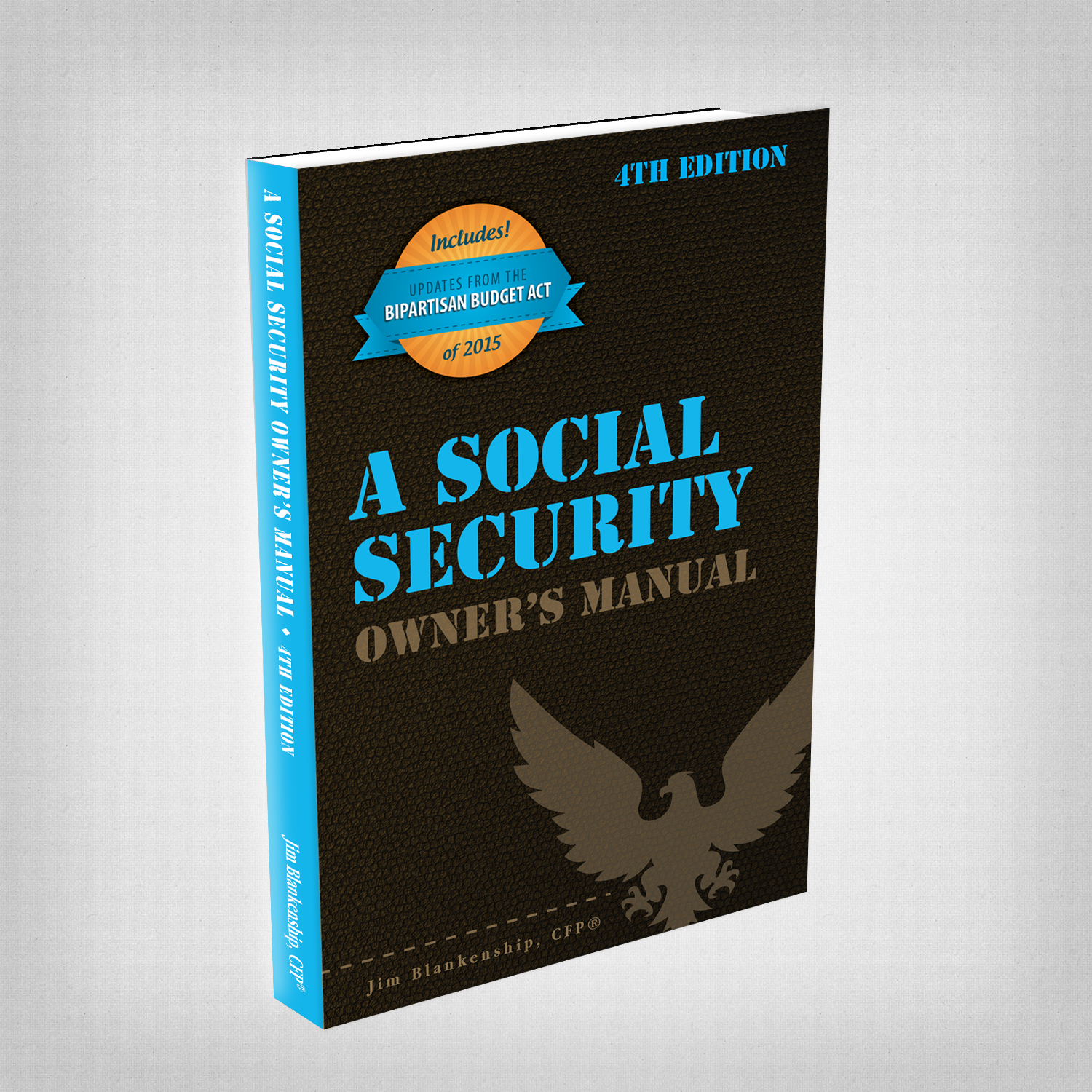
So that completes our discussion of Survivor Benefits.  For more information on any of these factors, click the links within the text above – and you can also find all of this information in the book A Social Security Owner’s Manual.  If you have comments and questions, I invite you to leave post them below and we’ll try to work out answers for you.

Enhanced by Zemanta

Social Security Income Replacement Rates

ALBERTA 1945 (EX-31-3-46) REPLACEMENT PLATE WR...

Image by woody1778a via Flickr

You might not know this, but it’s a fact that Social Security retirement benefits are not designed to provide retirement income in the same ratio to all levels of wage earners.  The system, being a social insurance system, benefits folks who have had lower income levels through their lives at a higher rate than folks who have had higher incomes.

So, what are the replacement rates that are experienced?  Of course it is different for each individual, but some averages are listed in the table below:


Average Lifetime Earnings

FRA Social Security Benefit

Replacement Rate

$16,700

$9,400

54%

$37,200

$15,570

40%

$58,900

$20,610

34%

$87,800

$24,000

28%


This is just a representative sample of various levels of lifetime average income.  It shows how, at lower income levels, Social Security replaces a much higher ratio of the pre-retirement income.  This means that at higher income levels, a higher amount of savings must be laid aside in order to ensure that adequate income is available for retirement.

This is not to say that the system is broken or unfair – it’s working exactly as it was intended to, by providing a measure of insurance to those who need it most.

Enhanced by Zemanta
%d bloggers like this: