

Photo credit: jb
While many folks would tell you that it can be a good idea to make non-deductible contributions to your traditional IRA, I believe it’s in the “Bad Idea” category for most situations. This is primarily due to the way the tax law works for IRA and non-IRA money. There can be good reasons for non-deductible IRA contributions, but today we’ll focus on the downside.
IRA Taxation
As you may be aware, distributions from your IRA are generally subject to ordinary income taxation. Of course, your non-deductible contributions are not taxed, but any growth in your account and any deductible contributions will be taxed at the ordinary income tax rate.
And since non-deductible contributions (typically) make up a small amount of your total IRA balance when it comes time to withdraw the money, there is little benefit to be had, pro rata from the non-taxed portion of each withdrawal. This is because of the way your withdrawals are treated: all of your IRA funds are considered in total and only the percentage of your entire IRA balance that represents the non-deductible contribution will be applied to each withdrawal.
Here’s an example: You have an IRA, which you’ve made deductible and non-deductible contributions over the years. Your non-deductible contributions total $20,000. The deductible contributions amounted to $50,000. The investments for each contribution have increased by 50%, so the entire IRA is worth $105,000. Since the non-deductible contributions equal 19.05% of the balance, if you take a distribution from your IRA of $1,000, only $190.50 (19.05%) will be non-taxable, the remaining $809.50 will be taxed at ordinary income tax rates. As you’re likely aware, the ordinary income tax rates range from 10% to 37% (in 2022), so this taxation can amount to quite a hit.
Non-IRA Taxation
By contrast, in a non-IRA account, you are taxed on the gains using the capital gains tax rates. So from our example above, if you had made your $20,000 investment in a taxable account instead of a non-deductible IRA contribution, and gains on the $20,000 amounted to 50% or $10,000, if you withdraw $1,000 from this account you’ll only owe capital gains tax on the $333.33 of capital gain. And capital gains tax rates presently range between 0% and 15% for most folks, up to a maximum of 20% at the highest bracket (2022 figures).
When you put the two concepts together and compare them, it’s hard to imagine why you might choose to subject your investments to a higher tax rate when you don’t need to. And that’s why I think this is a bad idea. The only thing you’re giving up is tax deferral on growth of your non-deductible contribution, but you can achieve this (more or less) by investing in growth-oriented assets that don’t produce dividends or other current income. With strict capital gains applying, your tax rate is much lower than the corresponding ordinary income tax rates applied to an IRA withdrawal.
Two More Things
Two additional benefits to the taxable investment over the non-deductible IRA:
- Your taxable account will never require you to take Required Minimum Distributions, but your IRA will, at your age 72. So technically you could leave that investment alone to grow for your entire life, never having to sell it and pay the capital gains tax on it… which brings us to the second additional benefit:
- At your death, your heirs can receive a stepped-up basis on the entire account. So not only can you avoid having to pay taxes for your entire life, your heirs may not have to pay tax on the capital gains in your taxable account either! With an IRA, all of those gains would still be taxable as ordinary income to your heirs.



 Sterling Raskie, MSFS, CFP®, ChFC®
 The latest in our Owner’s Manual series, A 401(k) Owner’s Manual, was published in January 2020 and is available on
  A Medicare Owner’s Manual, is updated with 2020 facts and figures. This manual is available on
  Social Security for the Suddenly Single can be found on Amazon at
  Sterling’s first book, Lose Weight Save Money, can be
  An IRA Owner’s Manual, 2nd Edition is available for purchase on Amazon. Click the link to choose the
 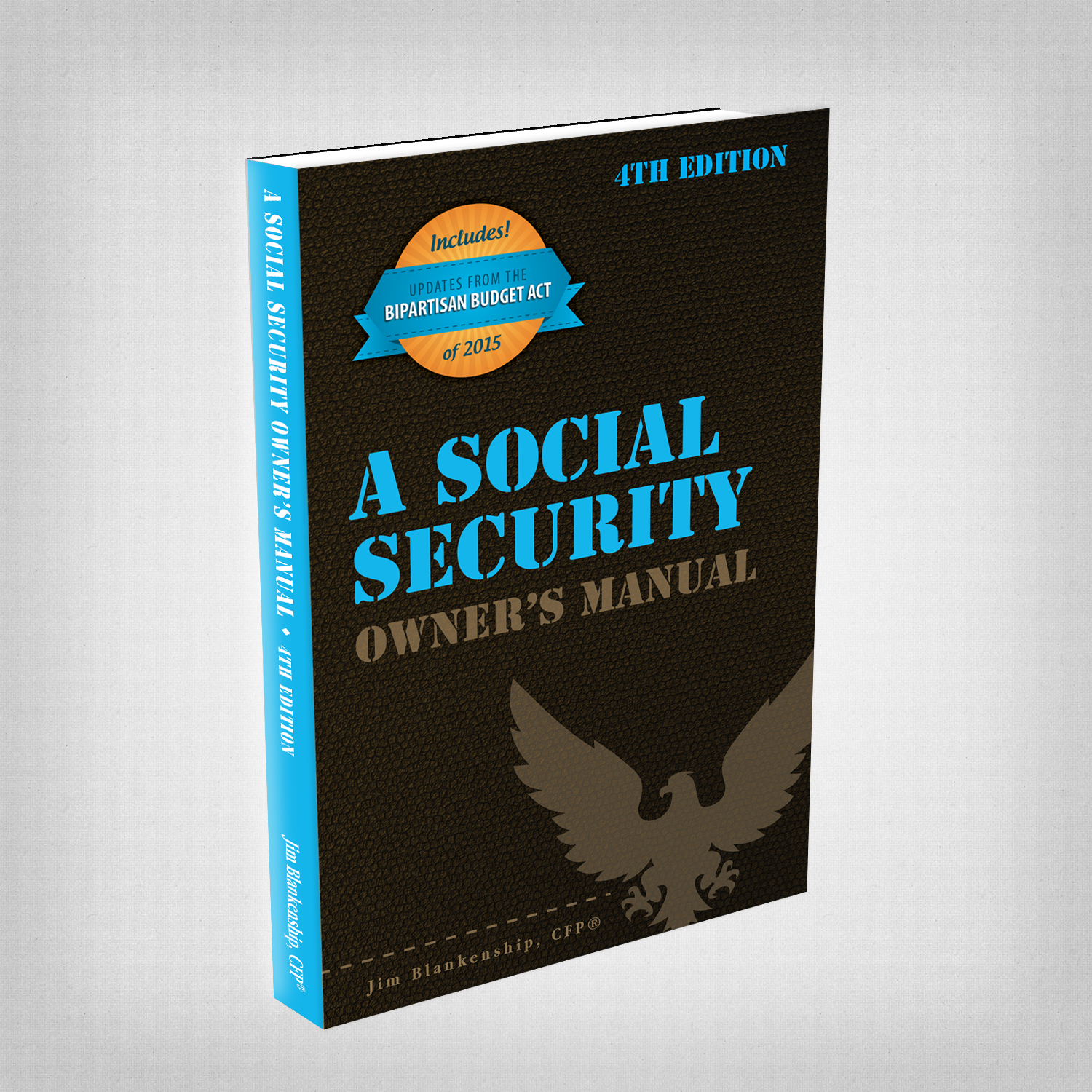 Jim’s book – A Social Security Owner’s Manual, is now available on Amazon. Click this link for the
  And if you’ve come here to learn about queuing waterfowl, I apologize for the confusion. You may want to discuss your question with Lester, my loyal watchduck and self-proclaimed “advisor’s advisor”.
No mention of the extra work when preparing your taxes and adjusting for the non-taxable percentage? That’s a true PITA.
Absolutely true. Keeping good records of your non-taxed withdrawals can be onerous. A properly-filled out Form 8606 each year is very helpful, however, because many times the software will keep this up-to-date for you.