
Photo credit: jb
In his Preface to the Fourth Edition of Benjamin Graham’s legendary book The Intelligent Investor, Warren Buffett wrote the following:
To invest successfully over a lifetime does not require a stratospheric IQ, unusual business insights, or inside information. What’s needed is a sound intellectual framework for making decisions and the ability to keep emotions from corroding that framework. This book precisely and clearly prescribes the proper framework. You must supply the emotional discipline.
I’ve seen the same sentiment boiled down and paraphrased a bit, also attributed to Mr. Buffett (although I couldn’t find the original source) as:
It only takes two things to make money – having a plan and sticking to it – and of those two, it’s the sticking to it that most investors struggle with.
Either way, the point is crystal clear – investing successfully, per se, is not rocket science, there are many sources you can use to develop your plan; or rather, your “intellectual framework for making decisions”. The difficult part is keeping your emotions in check when your investments have gone to extremes, high or low, so that you can stick to your plan. The whole reason for developing a plan in the first place is to help you to navigate the tough times.
The same goes for your overall financial goal plans – such as retirement plans or college savings. Developing a plan is not exactly simplicity – there are many issues to be dealt with to ensure that the plan itself is sound, including investment allocation, tax concerns, coordinating various sources (Social Security, taxable accounts, IRAs, 401(k)s, pensions, etc.), timing of contributions and withdrawals, and so on. These things are quantifiable, although the weaving together of these issues can be very complex.
The place where most financial and investing plans go awry is when difficulties arise, and you begin to question the plan. This is perfectly understandable, in part because you can often find yourself facing these difficulties in a vacuum, without any idea whether what you’re experiencing is common for all folks in your position or if you’re doing better, or if you’re doing worse. You may have no idea if the plan you’ve developed is appropriate for weathering the current storm, or if the reason you’re experiencing poor results is due to some problem in the plan itself.
This is where a good financial advisor can be worth her or his weight in gold. If the advisor you’ve chosen is properly qualified, he or she can draw upon voluminous knowledge and experience to help you understand what the plan needs to include to weather the storms. The second part, and according to Buffett the most important part, is staying with the plan even when things aren’t rosy all around. A good financial advisor, one who will operate as a fiduciary, undertakes the duty to maintain calm and to ensure that emotions are not driving the decisions.
Note: Not all financial professionals undertake this responsibility in their work with clients. Ask the questions, and if the financial pro you’re talking to won’t explicitly accept the responsibility to help you stay on track when things get rough, you need to look elsewhere for a new advisor. Try www.NAPFA.org for starters.
Most often this “sticking-to-it” part becomes the most difficult when there is great volatility on the downside in the markets. You don’t have to go very far back in time to recall some of those dark days… we saw such a dramatic downturn in the markets in 2020 and again in 2022. Those were scary times, to say the least. I remember sending out messages to my clients every few weeks during those days, repeating the mantra to stay with the plan, don’t panic. Maintaining perspective and remembering that the plan is for long term is the key – I can remember conversations where we discussed the concept that we’ve invested with the aim of using the money many years from now, and since what’s happening today is the short term, we need to maintain our positions.
That leads us to my final point on this quote: One thing that the rephrased quote above leaves out (versus the original) that I think is just as critical is where Mr. Buffett specifically refers to investing “successfully over a lifetime”. Mr. Buffett has many times stated:
I never attempt to make money on the stock market. I buy on the assumption that they could close the market the next day and not reopen it for five years.
… meaning of course, that moving in and out of the market based upon “timing”, gut feelings, or crystal ball predictions, is not the way to be successful. Having long-term plans with solid investments, not the “get rich quick” type of investment, is the way to success.
So – here’s another rephrasing with my adjustment: Have a well-thought-out long-term plan to help you make decisions for your future (investing or otherwise), and stick to it. And hire a financial advisor to help you with both, because you’ll need the guidance, knowledge, and discipline to help you through tough times.
Share, tweet, print, email, like or pin this post:
Like this:
Like Loading...






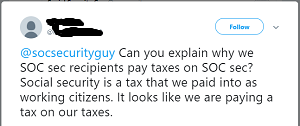 When you’re married to someone who has worked under the Social Security taxation system, you have two different benefits that may be available to you: Survivor Benefits, and Spousal Benefits. These two benefits may be more than the benefit you’ve earned under your own working record.


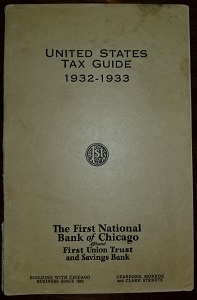
 As taxpayers, many of us have faced difficulties in dealing with the IRS – and it can be a daunting position to be in. One way to deal with these issues is to hire a CPA or Enrolled Agent to help you through the process. Another way is to deal with it yourself. The problem is that dealing with the IRS by yourself can be a very difficult thing to do.








.jpg)










 If you’re trying to find information from your prior years’ tax returns and you don’t have the old forms (who has the space to keep all that!?), you have a few options available to you.





 Sterling Raskie, MSFS, CFP®, ChFC®
 The latest in our Owner’s Manual series, A 401(k) Owner’s Manual, was published in January 2020 and is available on
 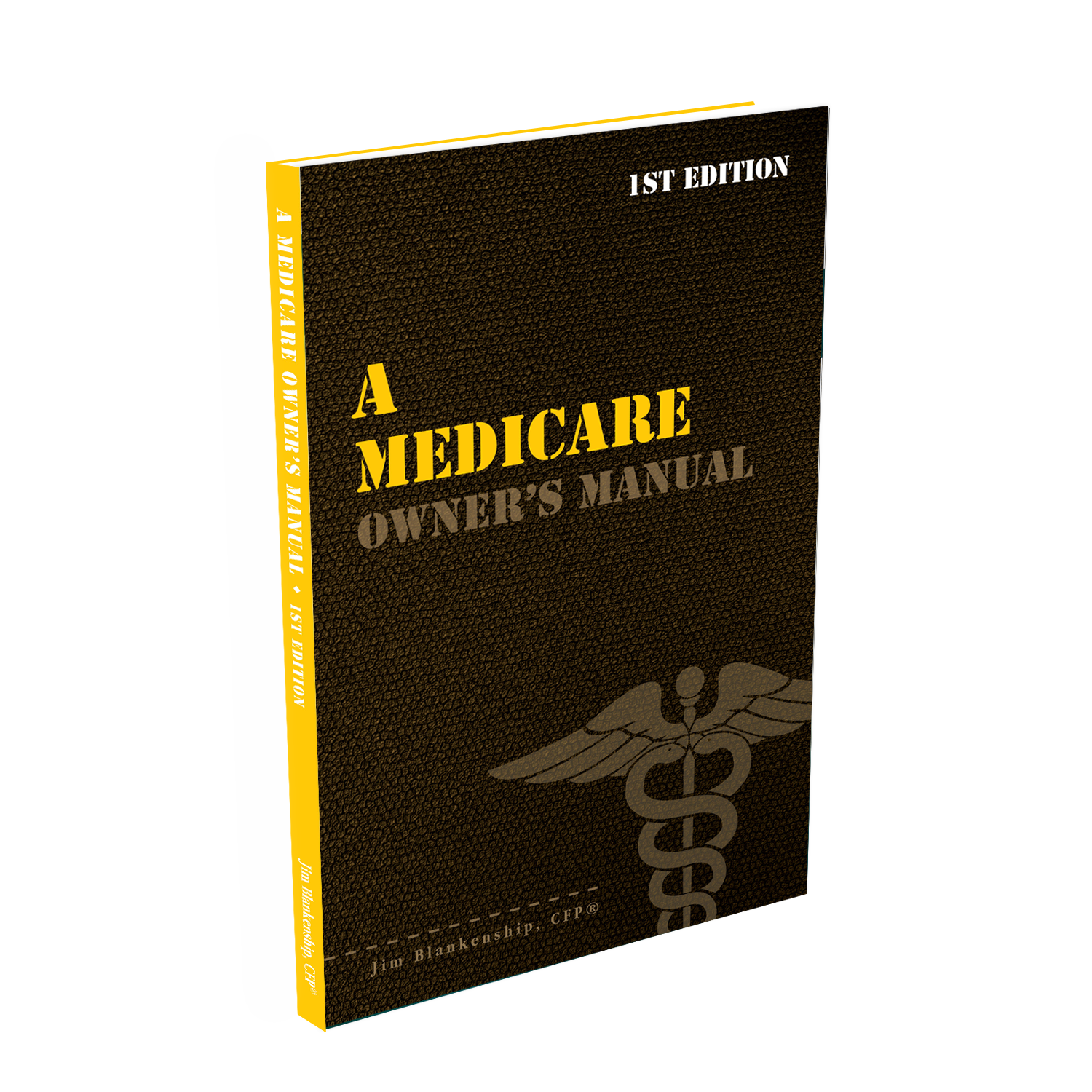 A Medicare Owner’s Manual, is updated with 2020 facts and figures. This manual is available on
  Social Security for the Suddenly Single can be found on Amazon at
  Sterling’s first book, Lose Weight Save Money, can be
  An IRA Owner’s Manual, 2nd Edition is available for purchase on Amazon. Click the link to choose the
  Jim’s book – A Social Security Owner’s Manual, is now available on Amazon. Click this link for the
  And if you’ve come here to learn about queuing waterfowl, I apologize for the confusion. You may want to discuss your question with Lester, my loyal watchduck and self-proclaimed “advisor’s advisor”.